Portable Power Station Planning for Winter Heating Controls and Pumps
Map the electrical parts behind heat and water service, verify exact starting and operating needs, and define a safe winter fallback.
A battery may run an electrical part of a heating or water system without keeping the home warm or restoring water service. First map what actually needs electricity: controls, an ignition or feed mechanism, blower, circulation pump, well pump, sump pump, alarm, or other accessory. Then check the exact appliance and station limits and decide what happens if the home or service becomes unsafe.
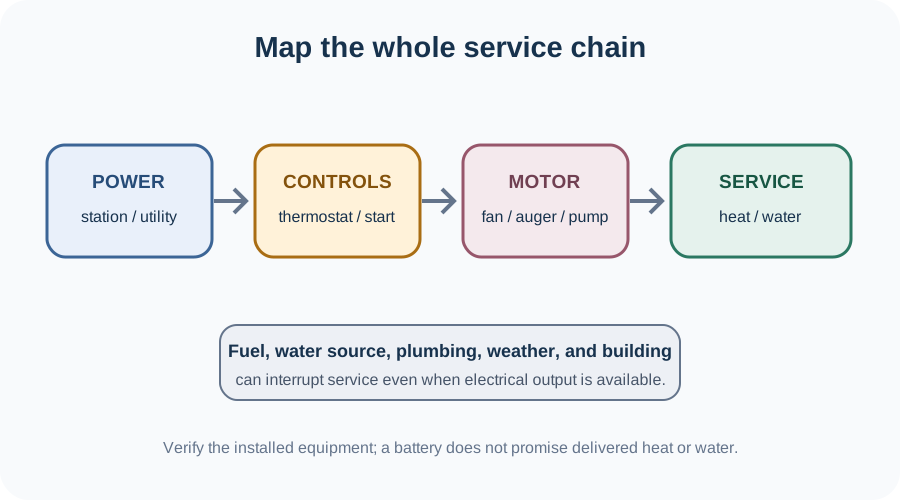
Map the appliance, fuel, and service chain
Record the heating appliance and installed model, then trace each required component. A fuel-burning furnace or boiler may need electricity for controls, ignition, a fan, or a circulator even when fuel remains available. A pellet stove may also rely on electrical feed and airflow. A water pump can restore a function only while its source, plumbing, pressure, and discharge path remain usable.
| System part | What to verify from the exact manual or label | What the station plan cannot prove |
|---|---|---|
| Controls / thermostat / ignition | Supply voltage, frequency, input, and approved connection | That fuel is available or heat will reach every room |
| Blower, fan, or auger | Running input, startup demand, cycle, and temperature limits | A universal runtime or delivered heat level |
| Circulator or well pump | Exact model, phase, current, start behavior, and operating cycle | Water pressure, water quality, or complete system operation |
| Sump or drainage pump | Pump, switch, alarm, discharge, and flood conditions | Protection from inflow that exceeds pump capacity |
Check output and energy as separate gates
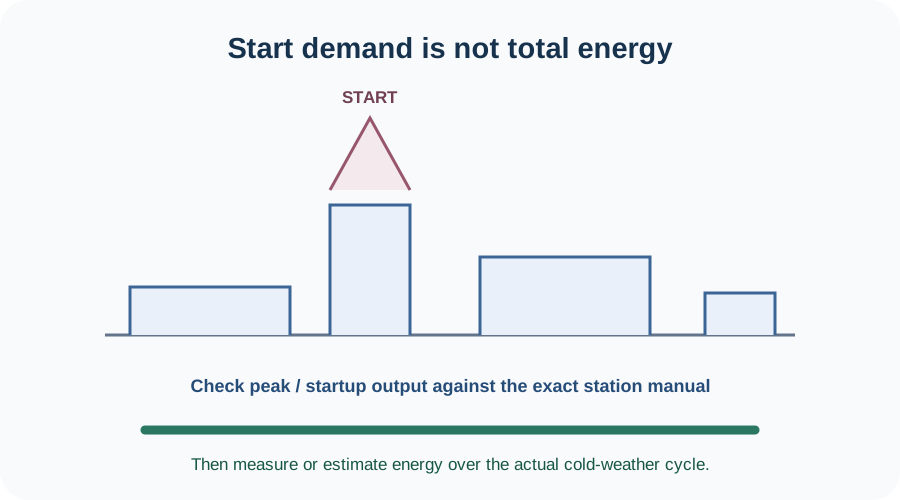
Read the installed unit’s manual and nameplate. Compare voltage, frequency, current, phase, continuous output, and motor or compressor startup against the station manual. If several components can start together, test that combination with the appliance maker or a qualified technician. A rated maximum current, a circuit-breaker size, or a motor’s locked-rotor entry does not reveal the full home’s measured demand or guarantee a successful start.
Next measure or estimate the energy over the expected cold-weather cycle. Controls that remain on, a blower that cycles, and a pump triggered by water use have different patterns. A short warm-weather test may not represent a colder day. Record the duration and conditions of any test and leave unknown cycle time visibly unknown. Do not translate the station’s watt-hours into heat output, water volume, or a safe indoor temperature.
Do not backfeed a furnace or household circuit, modify a connection, or select transfer equipment from this worksheet. Hard-wired systems require an arrangement designed for the equipment and local rules; consult a licensed electrical or HVAC professional. Keep fuel-generator use and carbon-monoxide protection separate from indoor battery-station use.
Define a winter stop and fallback plan
Before an outage, decide who receives weather alerts, how occupants will check indoor conditions, and where they can go if heating, water, or access fails. Agree on an early trigger with household members who may need extra support. Keep contact information and transport options available; a station should not be the only fallback for a cold home.
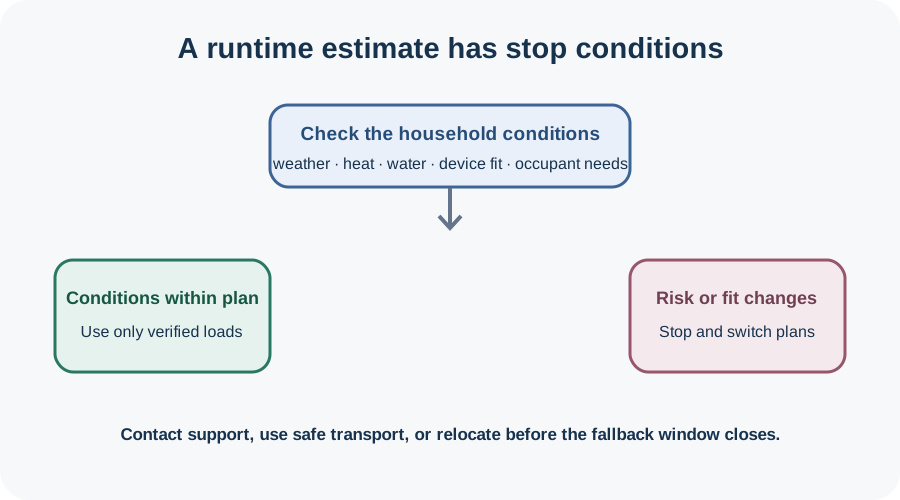
Follow current local cold-weather and power-outage advice. The U.S. National Weather Service’s Winter Resources include weather hazards and alerts; use the local forecast for the household’s location. In the UK, the UK Health Security Agency’s Weather-Health Alerting System provides early warning for adverse temperatures. If conditions are too cold for the home, CDC advises seeking shelter with friends or at a community shelter in its power-outage safety guidance. In Great Britain, an eligible customer can check supplier arrangements through Ofgem’s Priority Services Register guidance, but this does not guarantee power. Canada, U.S., and UK services differ, so verify the current local utility, emergency authority, and equipment instructions. If a medical device or health condition depends on power or temperature, make the continuity plan with the clinician, equipment provider, and local support service before winter.
Use the essential-load worksheet, multi-day recharge plan, and sump-pump planning article to keep the electrical estimate connected to the household’s wider fallback plan.