Medical Equipment Backup Power and Contingency Planning
Plan with the device maker and care team for exact power needs, approved backup equipment, interruption limits, and an alternate location.
A portable power station runtime estimate is only one input to a medical-equipment plan. It does not establish that a treatment can safely pause, that a station is approved for a device, or that a person can remain at home through an outage. Work with the treating clinician, equipment provider, and manufacturer before choosing a backup path.
Identify the exact setup
Record the device make and model, required settings, power supply, accessories, normal and peak demand, and any approved battery or DC option. Include heated tubing, humidification, monitors, chargers, or other equipment used at the same time. An adapter’s wattage rating describes its capacity, not necessarily the device’s typical use or the energy needed for a full night. Use the exact manual and ask the provider which modes and accessories must remain in use; do not change therapy settings to reduce power without clinical direction.
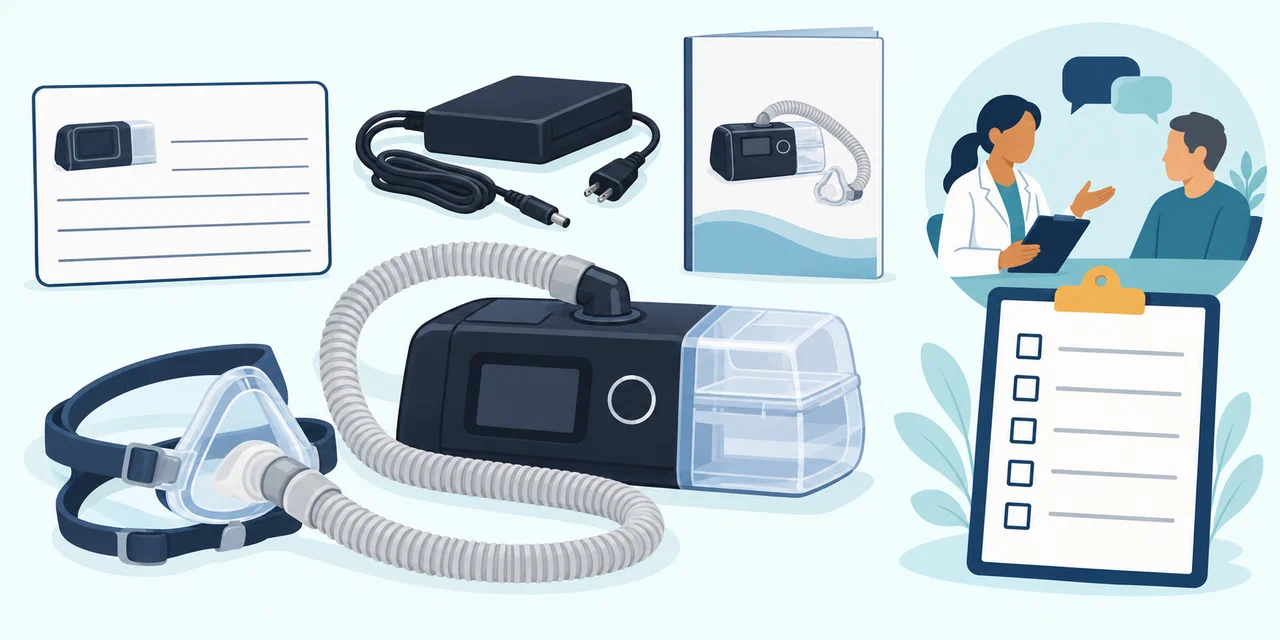
For example, ResMed’s AirSense 11 user guide lists a 65 W AC adapter and documents typical consumption of 56.1 W (111.5 VA) and peak consumption of 73.2 W (137.6 VA). Those are specifications for this model, not a promise about a person’s actual use or station runtime. The humidifier tub and heated ClimateLineAir tubing are part of the documented setup and can affect the load. ResMed’s UK listing for its AirSense 11 DC/DC converter specifies a 12 V/10 A or 24 V/5 A input and a 24 V/3.75 A output. This is a manufacturer-specific accessory path, not approval for an arbitrary station port, cable, or third-party adapter. Check the current manual and regional accessory listing, then verify the exact converter and station inputs with the manufacturer and provider.
Check both runtime and transition behavior
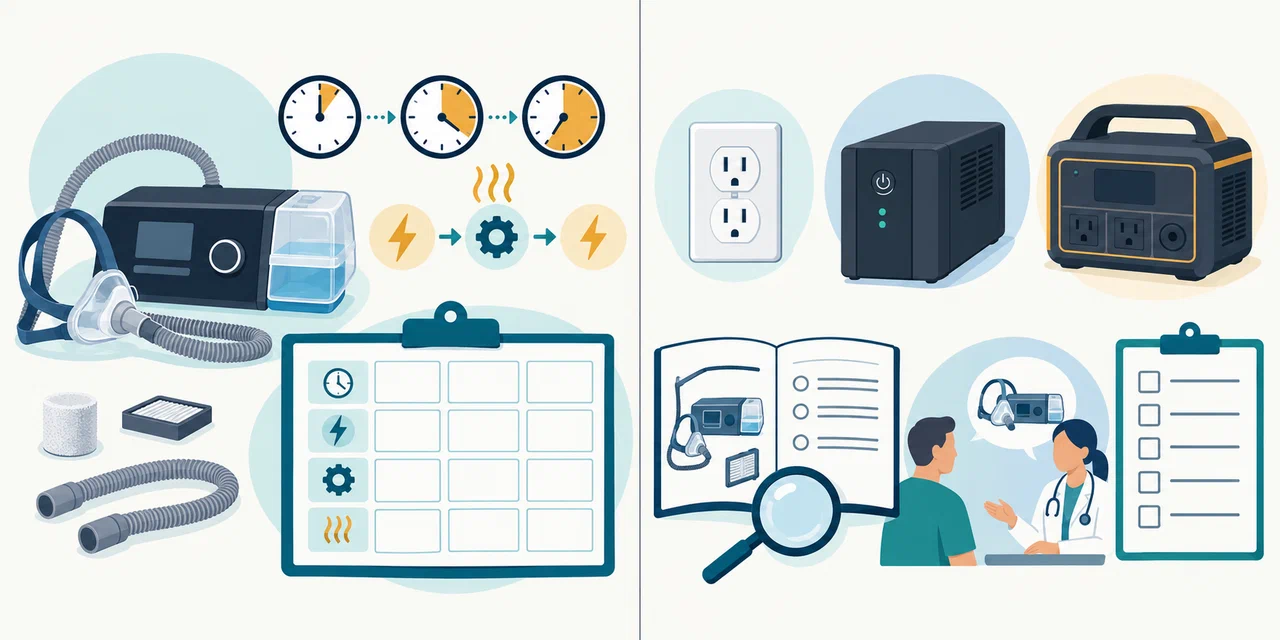
Compare the approved power path with the station’s exact voltage, frequency, current, connector, polarity, continuous output, surge limit, and usable energy. The energy calculation should use realistic measured consumption and the intended settings, with station overhead and conversion losses considered. A successful runtime estimate still says nothing about how the device behaves when the AC supply fails or switches over. Verify any UPS/EPS transfer requirement with the device provider and test the entire approved setup before relying on it.
Record when you will recheck the remaining energy, how much reserve the care team requires, and who will respond if the station alarms, the device stops, or the outage lasts longer than expected. A backup battery’s advertised hours may not match a particular device, settings, accessories, battery age, or ambient conditions.
Plan beyond the battery
Write down the clinician, device supplier, utility, caregiver, and emergency contacts. Identify a location where treatment or equipment support can continue, how you would get there, and what happens if roads, elevators, communications, water, or the care provider are also affected. In Canada, federal outage guidance recommends discussing medical needs, electricity-dependent devices, refrigerated medicines, and evacuation routes. In Great Britain, eligible households can ask both their supplier and network operator about the Priority Services Register. In Northern Ireland, households dependent on electricity or water for daily care can ask their providers about care registers. These are support paths, not a backup-power or medical-continuity guarantee. U.S. readers should ask their utility, care team, and local emergency-management office which arrangements apply locally.
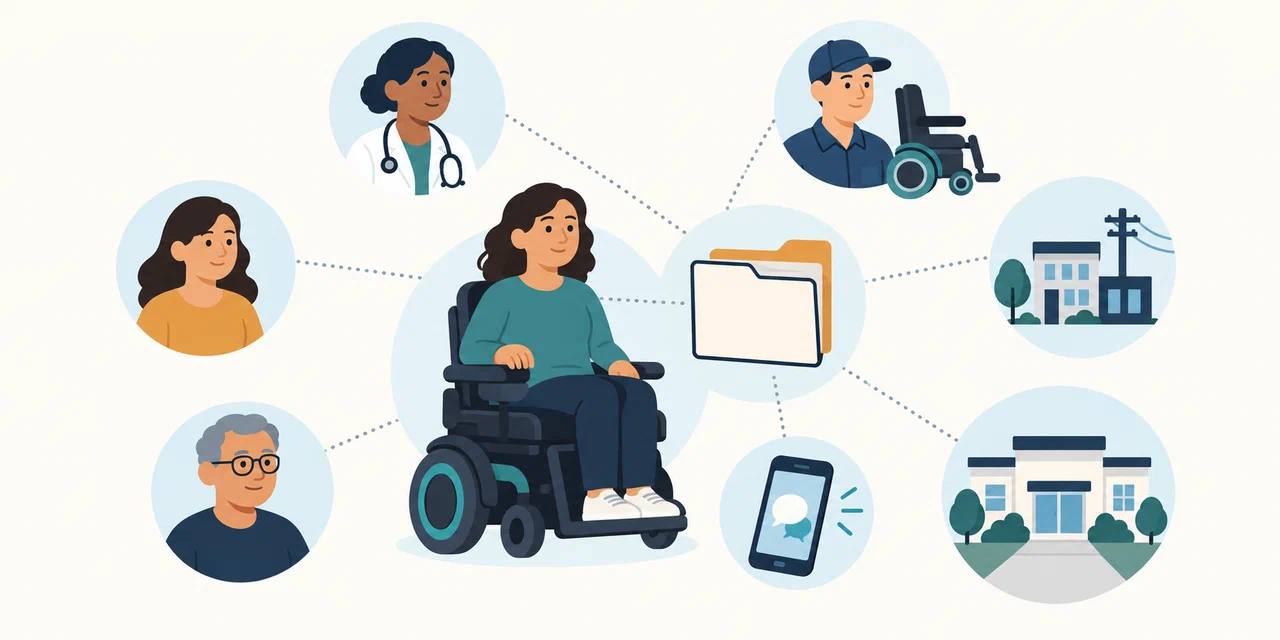
For anyone who relies on powered medical or assistive equipment, also plan how the person, equipment, and helpers will reach an accessible alternative if staying home is no longer safe. Identify accessible transport and destinations, who can help operate or move equipment, what batteries or instructions must travel, and how to communicate if elevators, phone service, or usual devices fail. Share the plan and equipment instructions with chosen helpers, and check that the alternate location can meet the person’s needs before treating it as a fallback. Canada’s emergency-preparedness guidance for persons with disabilities recommends a personal support network of at least three trusted people and advance planning for accessible evacuation, shelters, and equipment. It also notes that outages can affect elevators, accessible transportation, and accessible communication. Readers elsewhere should check local disability and emergency-management guidance; no helper, transport option, or shelter is guaranteed to be available.

Canada’s current power-outage guidance recommends an evacuation route that does not depend on elevators and notes that public electric-vehicle charging may be offline or crowded during an outage. Ask the property manager and local providers which route and support are actually available. A public charger is not evidence that a portable station can charge a particular vehicle or medical device.
If an elevator, lift, or stairlift is part of the route out, ask the building manager or equipment provider for the outage procedure and an alternate route before an emergency. Do not assume a portable station can safely run or move that equipment, or attempt a release procedure without the required training and authorization. In the United States, the CDC advises people who need accessible transportation to contact local paratransit or government services ahead of time, because planned transport may not be available during an emergency. In Canada, check provincial and local arrangements. The UK’s emergency guidance for lifting platforms reinforces the need for planned arrangements and trained people; it does not establish that a portable station is compatible with a lift.
Keep emergency instructions in a format the person can use, and agree how helpers will communicate if the normal phone or internet path fails. Canada’s accessible emergency-communication guidelines provide planning guidance; use the corresponding current guidance for the person’s location and communication needs. If a child uses powered equipment or has complex care needs, ask the care team what to pack and keep current. The U.S. CDC’s emergency medical kit checklist for children with special health care needs is a U.S.-specific prompt for that conversation, not a substitute for an individual care plan.
Some U.S. communities have explored utility notification, equipment-user registries, or places where people can recharge medical devices during outages. The CDC-funded ASTHO report Advancing Preparedness for Life Support Users During Power Outages describes community-program options; its findings are the authors’ and do not represent official CDC policy. Ask your utility and local emergency-management office what is actually available, who is eligible, how to reach it, and whether it supports the exact equipment. A registry, charging location, or referral is not a promise of continuous power or accessible transport.
For dialysis, contact the dialysis provider before an emergency about the usual center, an alternate center, current contact details, and what to do if power, water, roads, or treatment access fail. Treatment timing, medicines, diet, and any home-dialysis alternative are individual clinical decisions. CDC’s emergency dialysis guidance can help start that conversation; it does not approve a portable station or replace the provider’s plan.
If the device is life-sustaining or interruption could cause harm, use the provider’s written contingency plan and seek urgent help when that plan’s threshold is reached. Do not wait for a battery percentage to decide that care is safe. This guide is not medical advice and does not approve a station or connection.
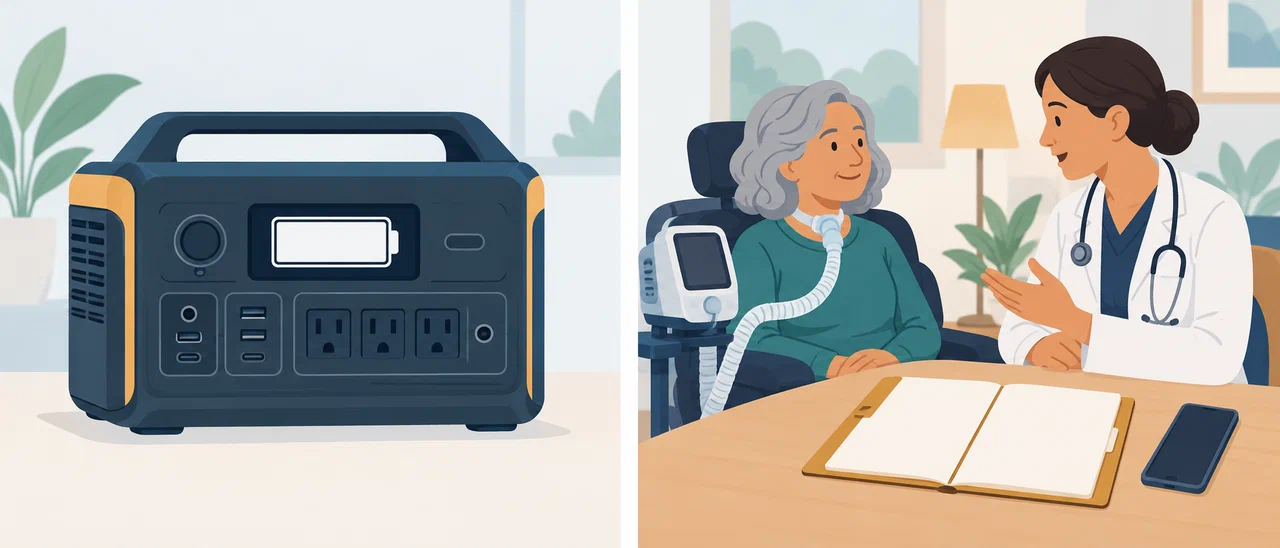
If the person also relies on a monitored personal alarm or telecare service, verify the alarm-to-response path separately with its provider and any housing provider. Power for the device alone does not prove that a call reaches the monitoring service. See the telecare and personal-alarm continuity guide.
Refrigerated medicine needs a different temperature and handling decision; see how to plan for medicine storage. For appliance loads and station specifications, check the load directory and model directory, then use the runtime guide only after the medical backup path is approved.