Washer and Washer-Dryer Runtime from a Portable Power Station
Compare the cycle energy and electrical requirements of a washer or washer-dryer before deciding whether a portable power station can support the task.
Laundry is a cycle task, not a steady load. A washer starts and stops its motor, pumps water, changes speeds, and may heat water. A washer-dryer adds drying behavior that can make a complete load very different from a wash-only cycle. Station runtime should therefore be based on the exact appliance and selected cycle’s energy, while compatibility depends on the appliance’s electrical requirement and the station’s output limits.
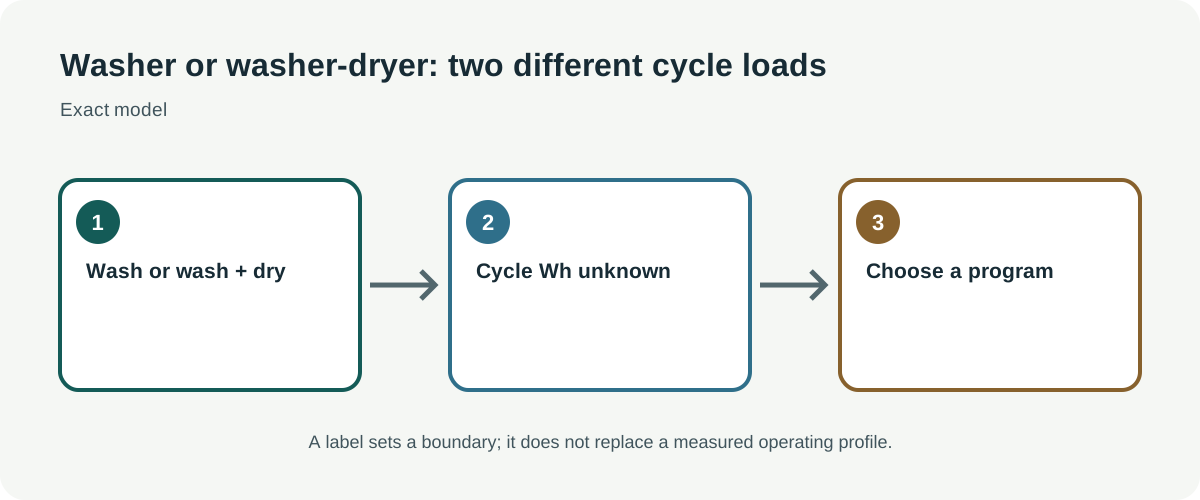
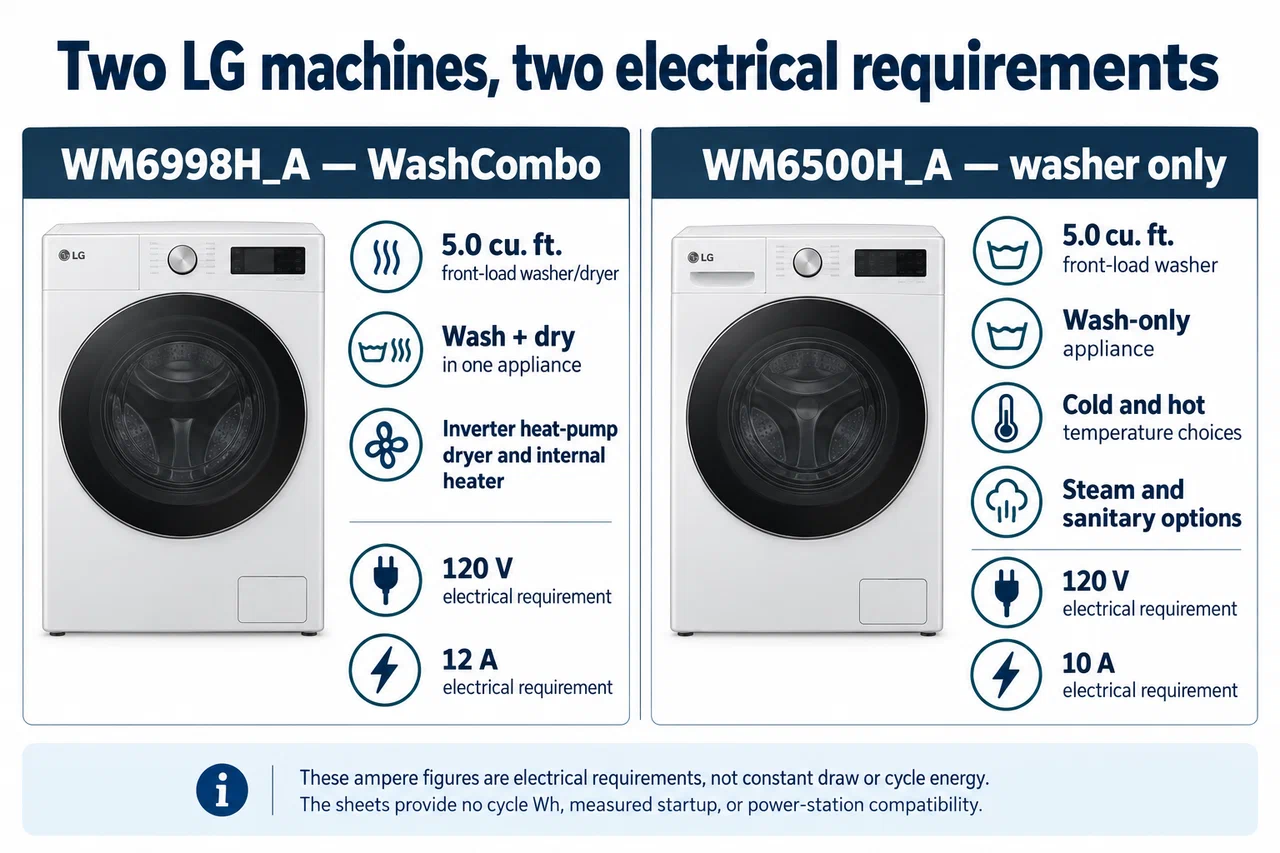
Two LG models show why the appliance type matters
LG’s U.S. WM6998H_A is a 5.0 cu. ft. all-in-one front-load washer/dryer with an inverter heat-pump drying system, direct-drive motor, and internal heater. Its specification sheet lists 120 V and a 12 A electrical requirement. The WM6500H_A is a 5.0 cu. ft. front-load washer without the combination dryer; LG lists 120 V and a 10 A electrical requirement and includes cold and hot temperature selections, steam, and a sanitary cycle. These are different machines and their electrical requirements are not cycle-average watts.
An ampere requirement does not mean the appliance continuously draws that current. The sheet does not give measured watt-hours for each cycle, heating stage, water temperature, or drying program. Do not multiply the capacity in cubic feet by a runtime factor or assume that the combo uses the same energy as the washer-only unit. Check the exact suffix and rating plate; other regional variants may differ.
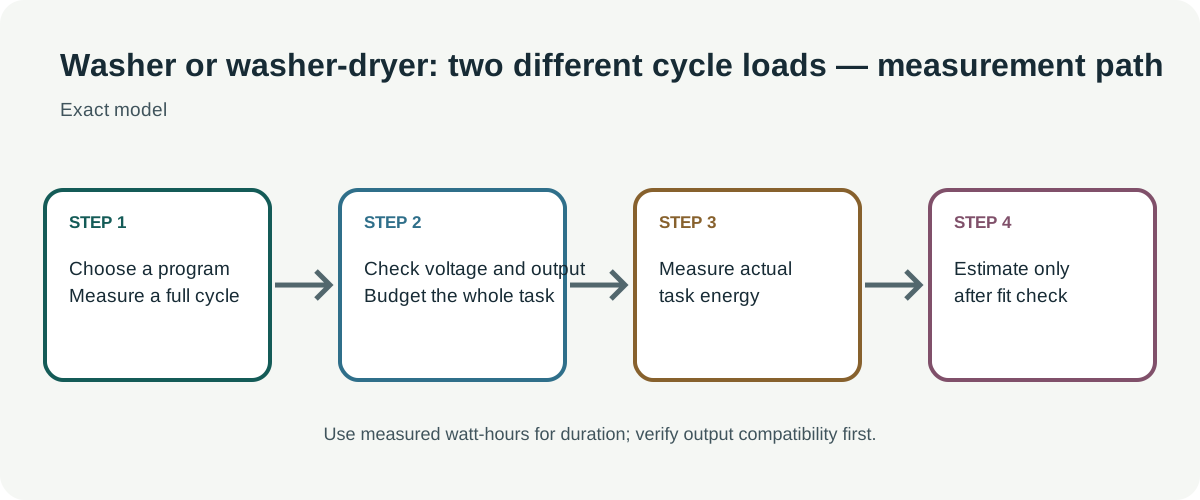
Verify station output before running a cycle
Read both manuals for supply voltage, frequency, outlet requirements, and any instructions on cords or circuit protection. Compare the station’s continuous AC output and applicable surge rating with the washer’s requirements. The station must handle motor and pump behavior and any heating demand without overloading or shutting off. Do not infer compatibility from a nominal 120 V outlet alone, and do not connect the station to household wiring or use an unapproved transfer path.
A successful short test with an empty drum does not establish support for a full wash-and-dry program. Water temperature, load size, selected options, water pressure, drainage, and whether drying follows the wash all change the task. If the station manufacturer or appliance manual does not permit the combination, do not experiment with a full cycle during an outage.
Measure the task you intend to run
When the manuals allow the setup, use a suitable meter to record watt-hours at the station output across a complete cycle. Write down the model, cycle name, load size, water-temperature choice, options, and whether the cycle includes drying. For repeat planning, measure more than one representative load and include the machine’s transition into idle if it matters. Keep wash-only energy separate from wash-plus-dry energy.
Use station-side Wh where possible, because that includes the power path the battery actually supplies. A wall meter can describe appliance energy but does not account for station conversion losses. Estimate the number of planned loads from measured Wh per cycle and the station’s usable AC energy, leaving reserve for temperature, battery age, other loads, and unexpected cycle changes. If a cycle measurement is unavailable, the LG current figures alone do not support an honest runtime estimate.
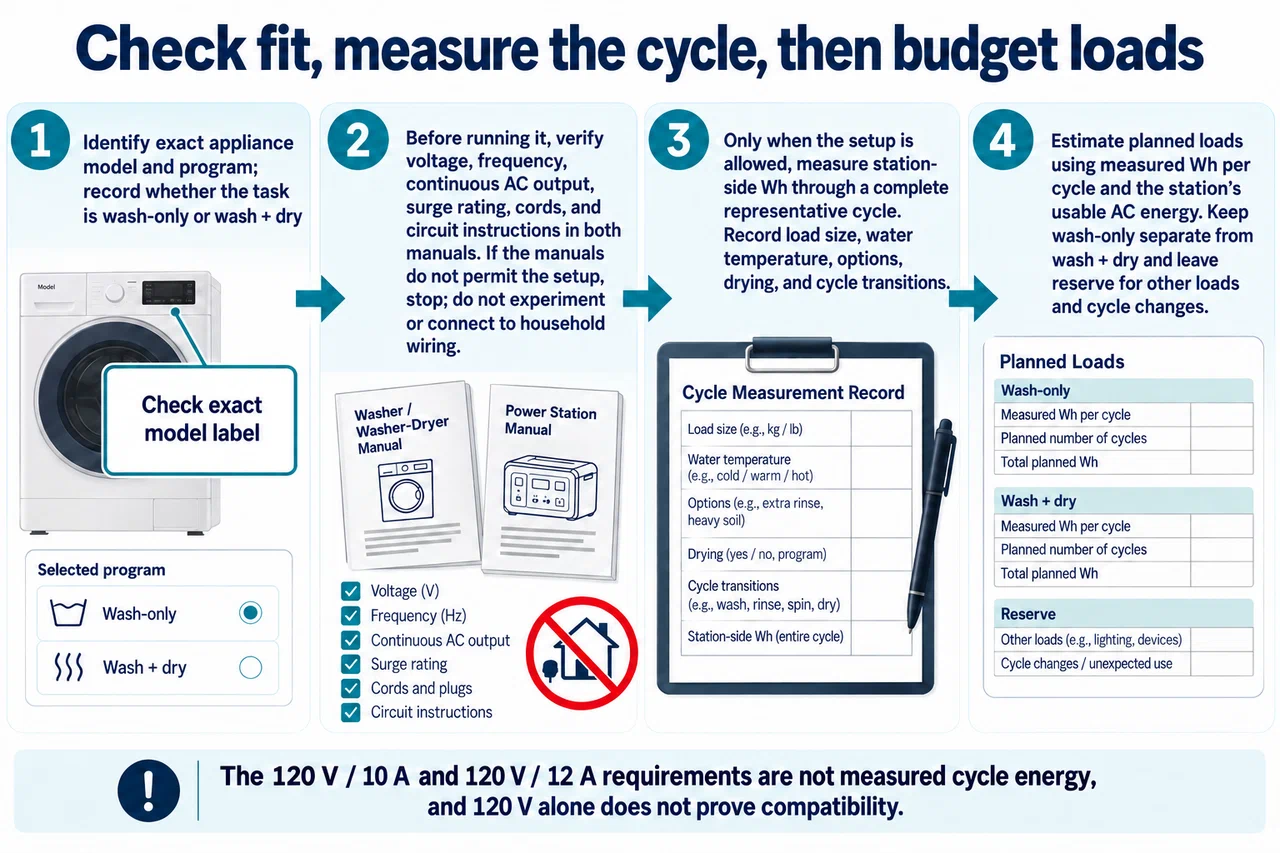
Plan around water and the whole laundry setup
A washing machine also depends on water supply and a safe drain. The station powering the machine does not supply water pressure, prevent a hose leak, or establish that a dryer can vent or operate as installed. Keep the appliance level and installed according to its manual, and supervise an outage run so a pump or drain problem is noticed. Avoid changing required grounding or plumbing arrangements to fit a station.
For a brief outage task, identify which part matters most: a wash, a wash-and-dry cycle, or a single rinse. Measure that exact sequence and run it only after compatibility is confirmed. Do not assume a washer’s advertised capacity or an electrical requirement predicts how many loads a particular station can complete.