Room Air Conditioner Runtime from a Portable Power Station
Check a window or room air conditioner by its exact voltage, startup behavior, measured cooling energy, and station output before planning runtime.
A room air conditioner can use less power than some portable floor units, but that does not make its runtime predictable from the cooling capacity or a single label number. Match the exact model and regional electrical rating, then confirm the station can start and operate its compressor. Room temperature, sun, insulation, airflow, and thermostat setting affect how often the compressor runs.
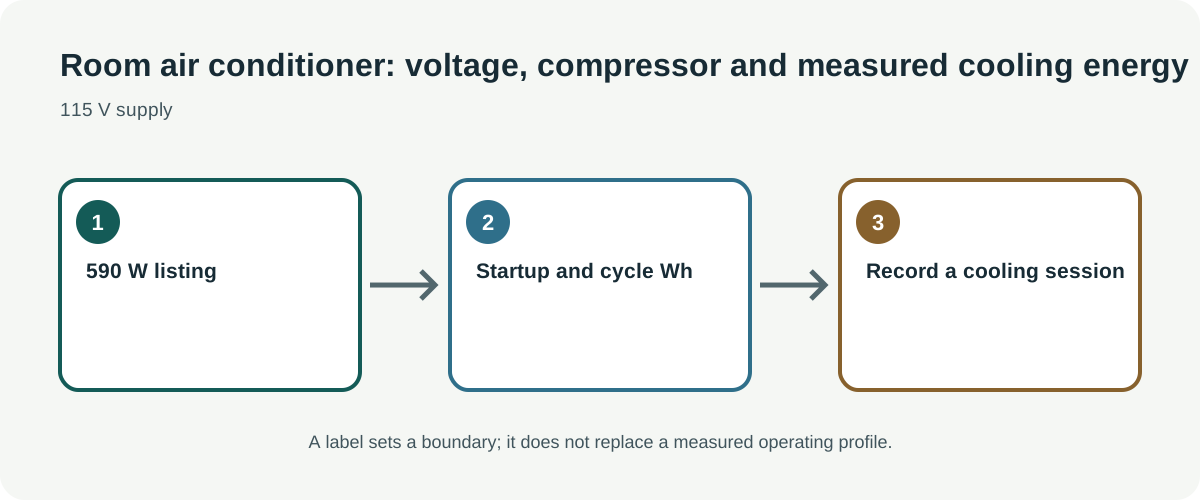
What GE lists for the ASC05LA
GE identifies the ASC05LA as a 115 V room air conditioner with 5,000 BTU of cooling capacity, a 590 W rating, and rated current of 5.5 A. GE marks the model no longer manufactured. These specifications describe this named model; they are not a measurement of its cycle-average draw, compressor-start demand, or watt-hours per hour of cooling. BTU/h describes heat removed under the manufacturer’s test context, not electrical energy available from a battery.
Use the appliance nameplate and manual for the unit in front of you. Older products may have a different suffix, changed electrical components, or a service history that affects operation. Do not transfer the ASC05LA figures to another 5,000 BTU unit or use them as a profile for a portable air conditioner. The portable AC guide covers floor units and keeps their airflow and exhaust setup distinct.
Check voltage, startup, and installation
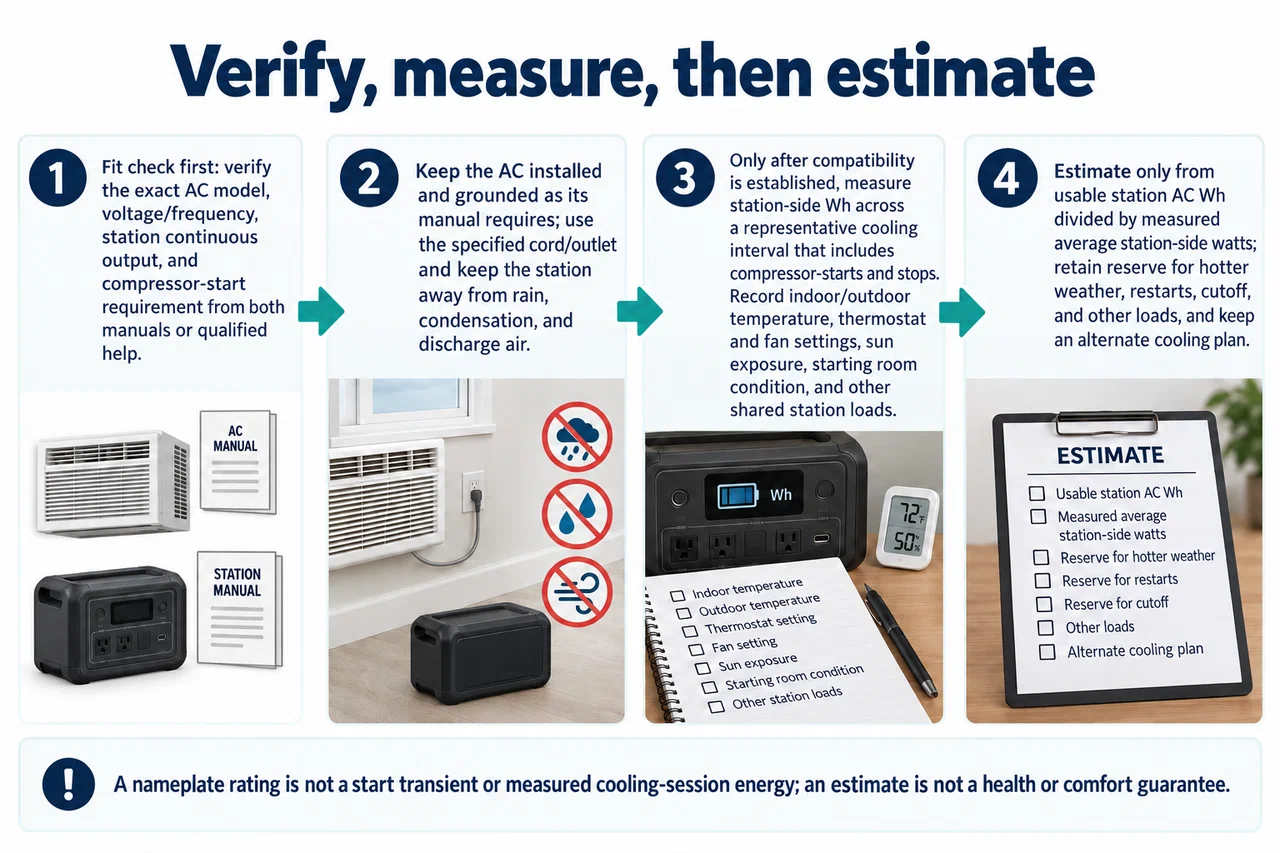
Confirm the station supplies the air conditioner’s exact voltage and frequency, and compare its continuous output with the measured running load. The compressor may require more power during a start than it does once running. A 590 W rated value and a 5.5 A label do not reveal the start transient; a generic surge multiplier cannot prove the pairing will work. Check the manuals for both products and use an appropriate meter or qualified help when the starting requirement is unknown.
Keep the air conditioner installed and grounded as its manual requires. Use the outlet and cord arrangement specified by the appliance manufacturer. Do not defeat the ground, improvise a building-wiring connection, or place a power station where rain, condensation, or the unit’s discharge air can reach it. Include any lights, fans, or other loads sharing the station in the output check.
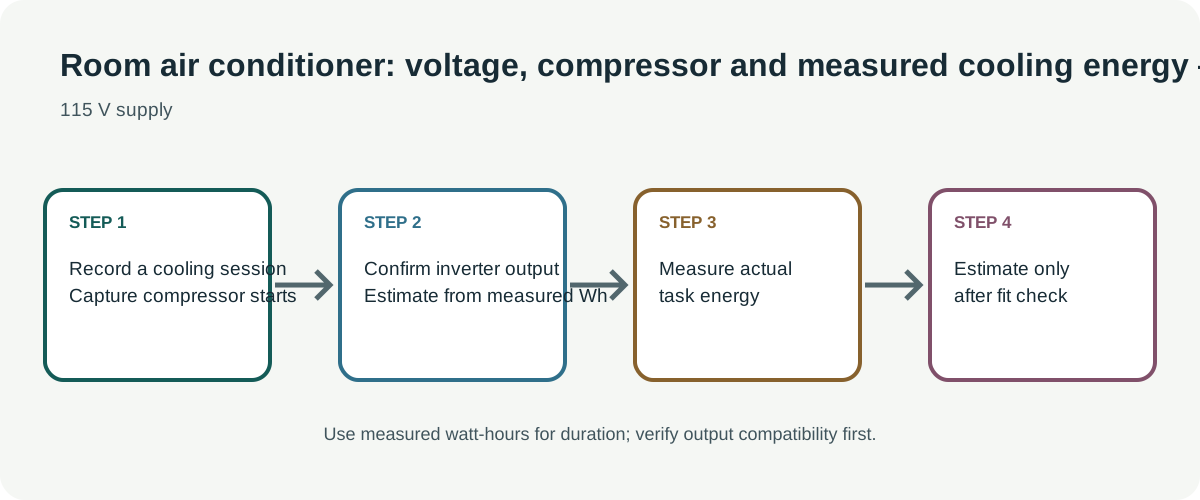
Measure a representative cooling period
After compatibility is established, measure station-side watt-hours over a useful interval that includes compressor starts and stops. Record the indoor and outdoor temperatures, thermostat setting, fan setting, sun exposure, and whether the room was already cool. A few minutes of running-watts data cannot describe a hot room over an afternoon. If a wall meter is used instead, remember it does not include the station’s inverter losses.
Estimate duration from the station’s usable energy for AC output divided by measured average station-side watts. For example, use the measured energy from a representative hour or cooling session to estimate the intended period, then reserve capacity for hotter conditions, restart attempts, station cutoff, and other loads. If no measurement is available, explain a scenario using the rated value as a continuous-load assumption; do not call that value typical or promise a duration.
Cooling runtime is not heat protection
A running compressor does not guarantee that a room will reach or hold a safe temperature. Heat entering through windows, high humidity, poor sealing, room size, and a clogged filter can change performance. Plan an alternate cool location, monitor indoor conditions, and decide in advance when to move people or stop relying on the setup. A watt-hour estimate is an electrical planning aid, not a health or comfort guarantee.
Before an outage, test the exact room AC and station together under normal installation conditions. Record whether every compressor start succeeds, how much energy the complete cooling period uses, and what reserve remains. If results vary substantially with weather or room conditions, use a conservative range and maintain another cooling plan.