Dehumidifier Runtime from a Portable Power Station
Estimate a named compressor dehumidifier from measured duty-cycle energy while checking its startup, pump, and manufacturer connection requirements.
A compressor dehumidifier cycles according to humidity, room temperature, fan setting, defrost, and condensate handling. A listed wattage helps check whether a station might support the load, but it is not enough to estimate hours. First verify the exact unit’s electrical instructions; then measure its energy through representative operation.
Use the named model as a bounded example
GE lists 530 W for the APHL50LB, a 50-pint portable dehumidifier with a built-in pump and Smart Dry. The product-page figure is not a measured average and does not show compressor startup. The manual covers the APHL50 family and says Nonstop mode can run at maximum dehumidification settings, while humidity-controlled operation changes behavior. Automatic defrost stops the compressor while the fan continues, then resumes dehumidification. Some models use an internal pump to remove condensate.
Those are useful details for designing a measurement, not a runtime table. The sources do not provide cycle-average Wh, locked-rotor current, pump energy, or a portable-station compatibility result. The product page also says this model is no longer manufactured; confirm the label and manual for the exact appliance at hand.
Follow the electrical connection instructions
The APHL50 manual says to use a properly grounded individual outlet matching the rating plate, and says not to use an extension cord, surge protector, or multi-outlet adapter. A portable station is not automatically an approved replacement for the specified source. Ask GE or a qualified service provider whether the intended station and connection are acceptable. Do not defeat a grounding feature or route a cord contrary to the manual.
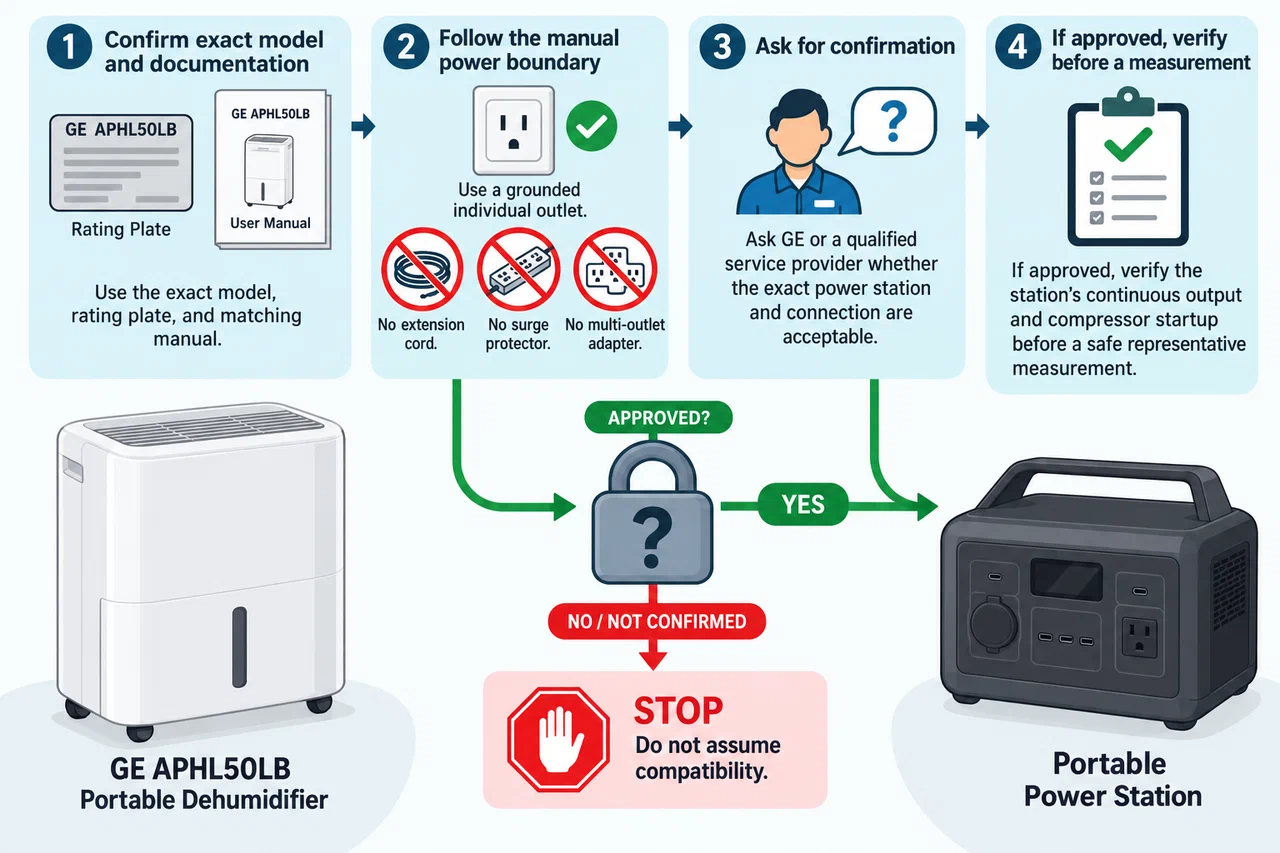
If the source approves the setup, compare station continuous output with the appliance load and check compressor startup. Include the built-in condensate pump if it operates at the same time. Do not infer compatibility from the 530 W listing or a 15 A plug description.
Measure across changing conditions
For an approved setup, record Wh over enough time to include compressor cycling, fan operation, defrost, and pump operation. Keep the humidity target, room conditions, hose or bucket arrangement, and mode representative. A wall meter records appliance-side energy; a station-side reading also includes conversion losses and inverter overhead.
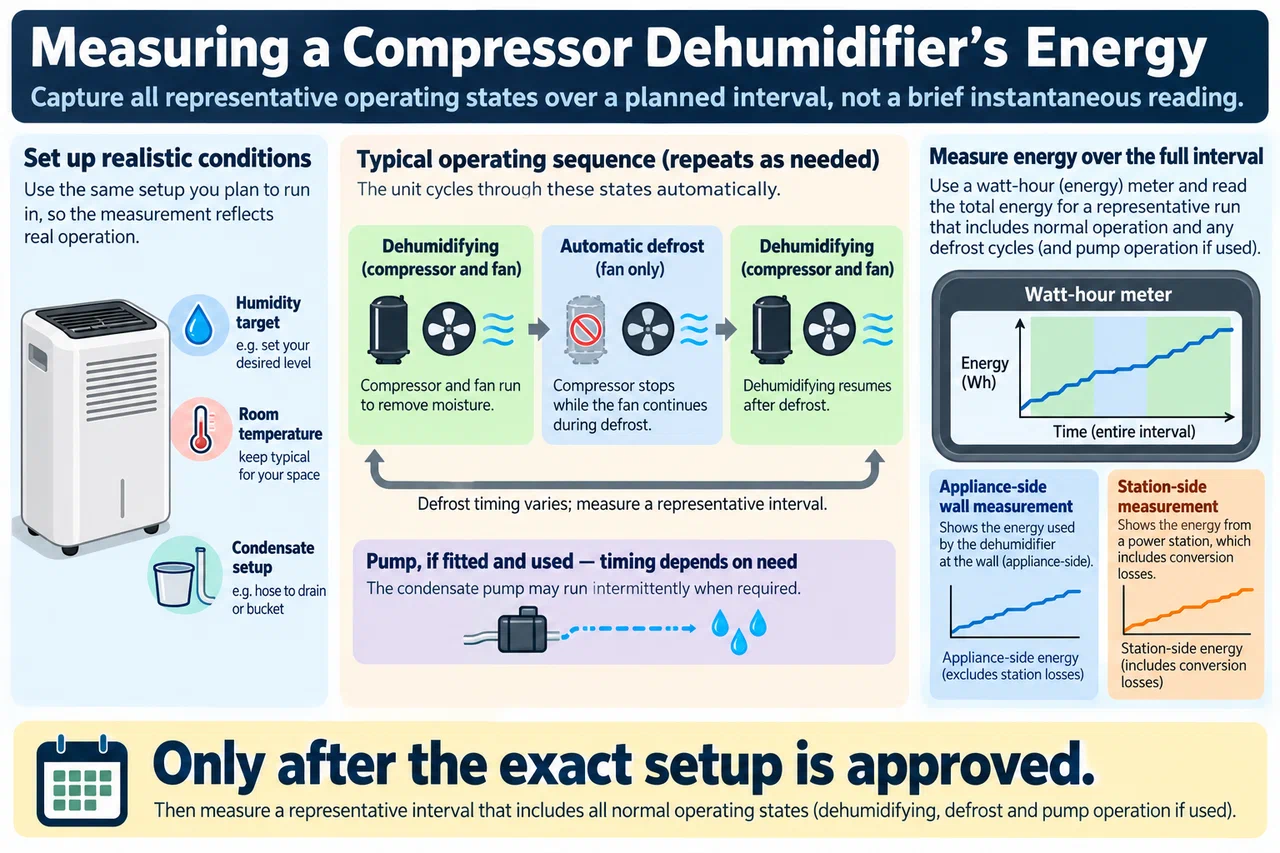
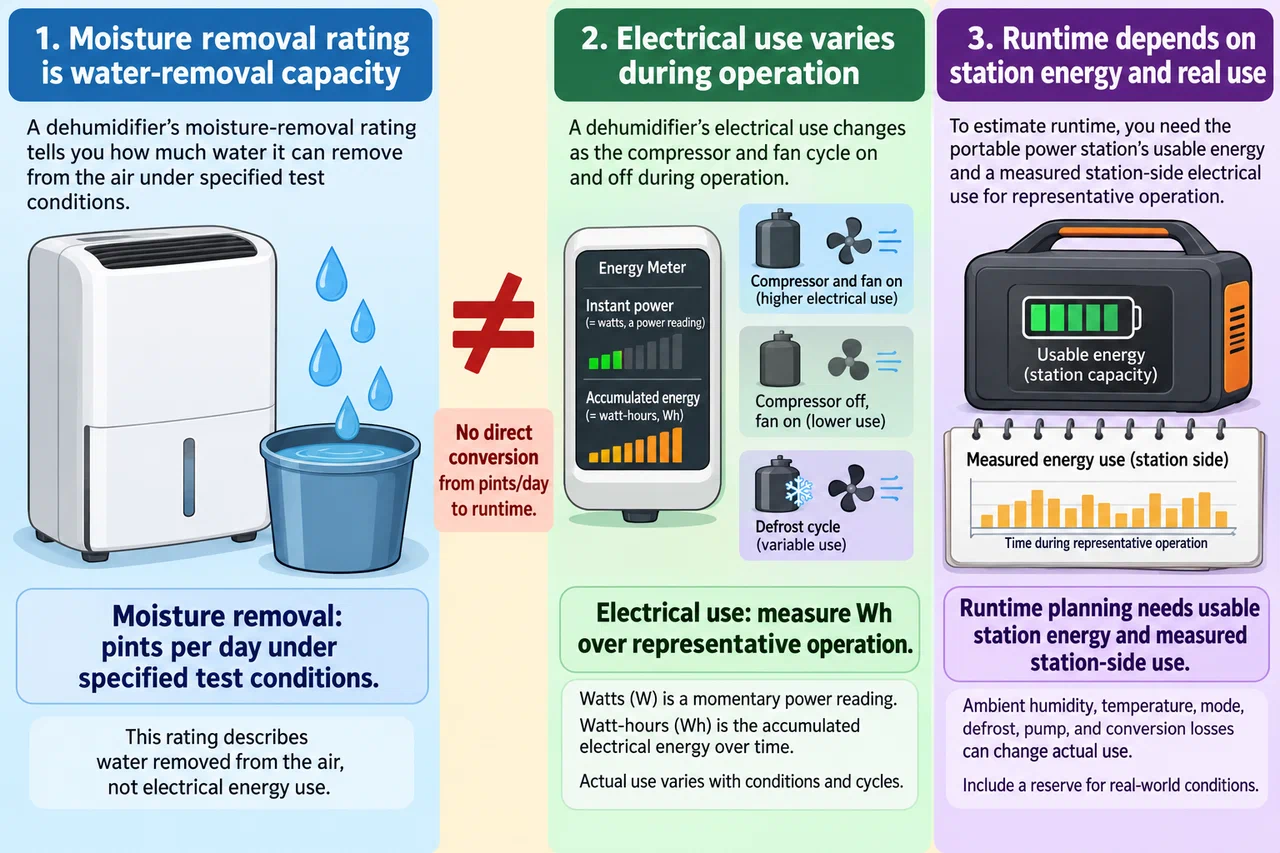
Divide usable station energy by the measured average watts, or compare measured station Wh over the planned interval with usable capacity. Retain reserve for higher humidity, warmer or cooler conditions, restart attempts, and other loads. A short run during a dry afternoon may understate energy needed in a damp basement.
Decide whether moisture control is essential
A dehumidifier may help protect a space or reduce dampness, but its absence does not have the same consequence in every building or time window. Identify the actual risk, ventilation options, condensate plan, and alternate location before assigning the station’s capacity. The appliance’s pint-per-day rating is moisture-removal capacity under specified tests, not water removed in every home and not an electrical runtime number.
Test the unit and station together in normal conditions before relying on them. Stop and seek manufacturer guidance if the station trips, the unit overheats, water approaches electrical equipment, or the specified power path cannot be maintained.