Instant Pot Duo 6QT Runtime from a Portable Power Station
Plan Instant Pot Duo energy from the complete recipe and selected mode, and check the cooker’s electrical requirement against station output.
A multi-cooker changes its power use across a recipe. Heating and pressurizing, holding a selected temperature, releasing pressure, and keeping food warm are different stages. A single rated-watt figure can guide the station-output check but cannot tell you how much energy a recipe will need. Measure the complete cooking task in the mode you plan to use.
What the Duo 6QT listing establishes
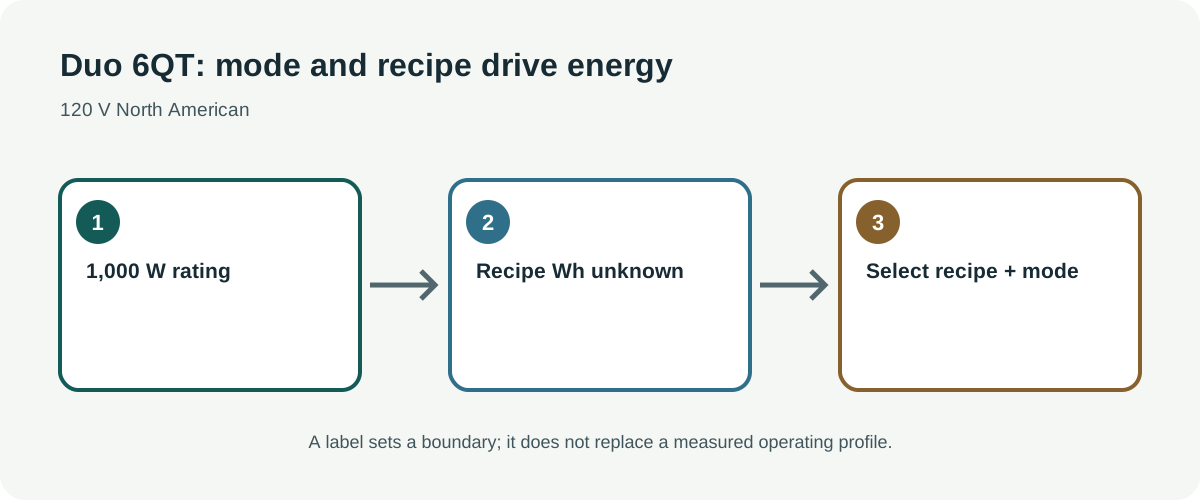
Instant Pot lists the North American Duo 6QT, SKU 112-0170-01, at 1,000 W, 120 V AC, 60 Hz, with a six-quart capacity. Its functions include pressure cook, slow cook, sauté, steam, rice, yogurt, and keep warm. The product listing does not provide measured energy per recipe, preheat duration, temperature-control duty, or separate keep-warm consumption. Do not treat 1,000 W as the constant draw for every mode or every minute.
The evidence applies to that North American listing. Check the rating plate and manual for your exact model and market. Other sizes and versions may have different ratings or controls. The programmed time shown on the display may not include the entire task: preheating or reaching pressure can take additional time, and cooking may be followed by a warm period or pressure release.
Confirm the station can support the selected mode
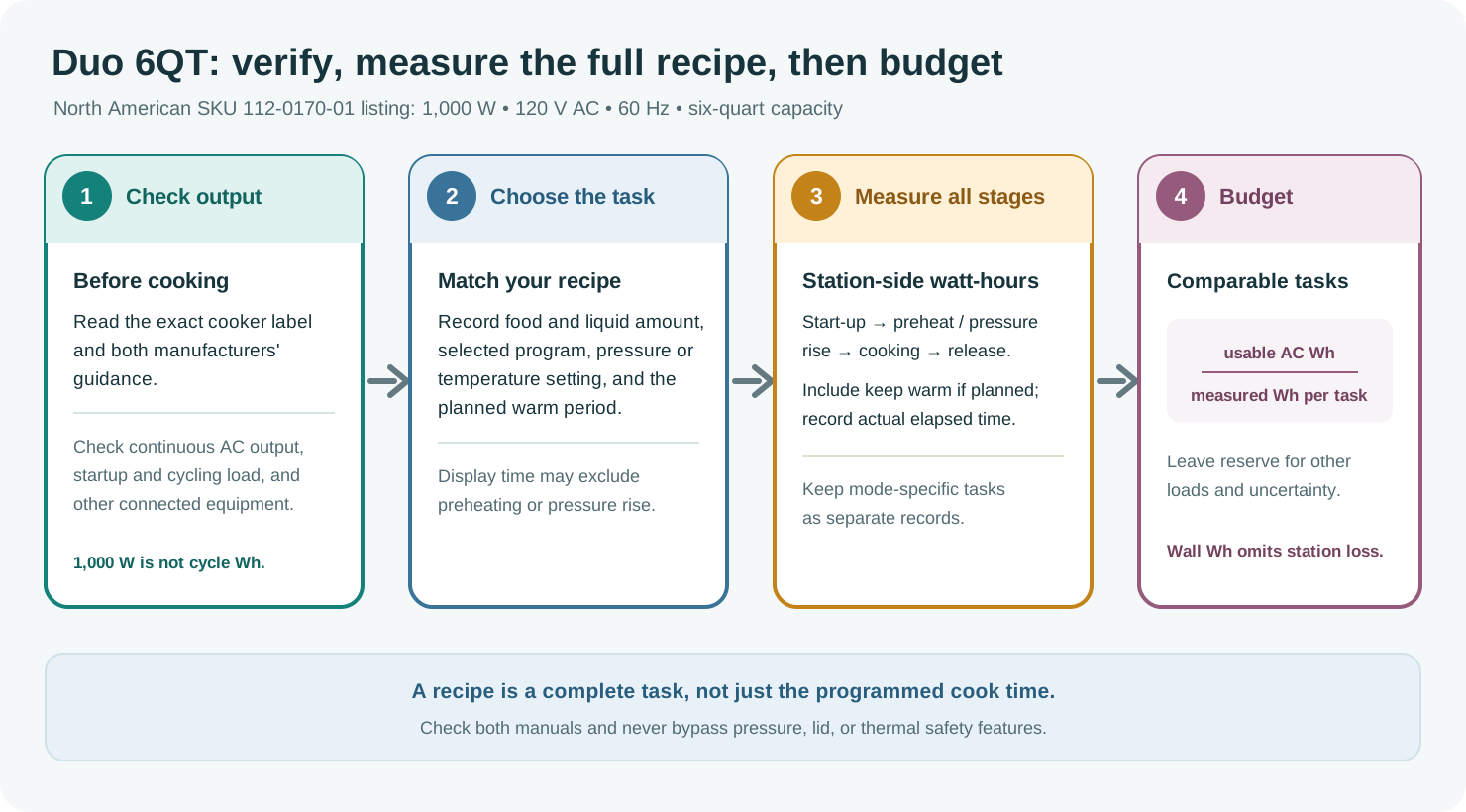
Compare the cooker’s required supply and rated load with the station’s continuous AC output. The station also needs to tolerate the cooker starting its heater and cycling during a recipe. Check any surge limits and instructions from both manufacturers, and include other loads. A 120 V outlet alone does not establish sufficient wattage, safe grounding, or authorization for the appliance to run from a portable station.
Place the cooker and station on stable, dry surfaces with the clearance and ventilation their manuals require. Keep steam away from the station. Do not bypass the lid lock, pressure release, thermal protection, or other safety features to reduce energy. Use the cooker only as intended and follow the recipe and maintenance instructions.
Measure the complete recipe
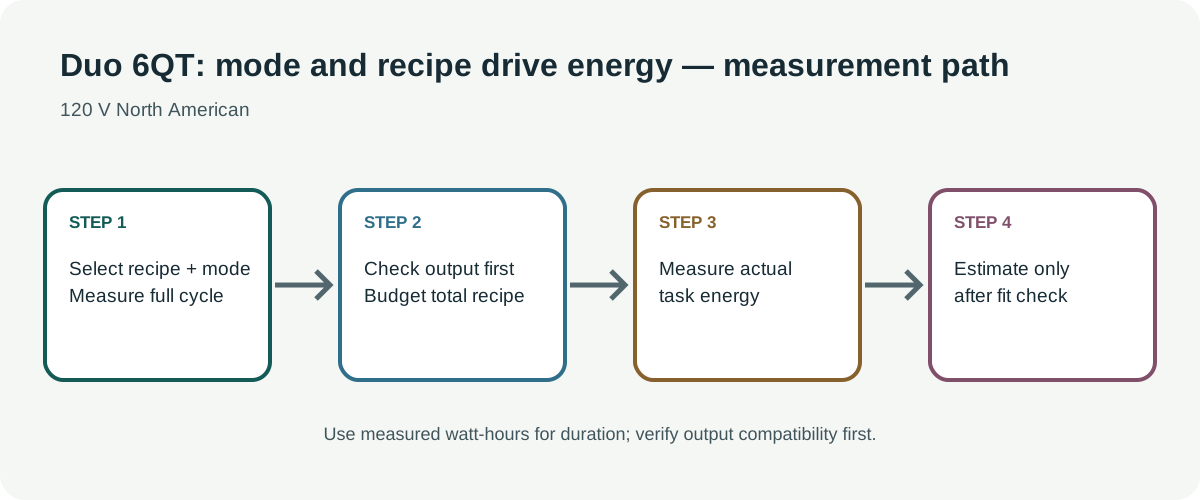
If both manuals allow the setup, measure watt-hours at the station from startup through the end of the chosen process. Record the recipe, amount of food and liquid, selected program, pressure or temperature setting, actual elapsed time, and whether warm mode remained on. Measure a second comparable cook if the first result is unusually short or long. Use separate records for pressure cooking, sautéing, slow cooking, and warm holding.
Station-side Wh best reflects energy taken from the battery; a wall measurement does not include conversion loss inside the station. Divide the station’s usable AC energy by measured Wh for the complete task to estimate how many comparable tasks fit, then reserve energy for other equipment and uncertainty. If there is no cycle measurement, the 1,000 W label permits only a stated scenario based on an assumed duration, not a typical recipe runtime.
Keep the cooking task and food plan separate
A station may stop before the food reaches the intended state, and an interruption can affect the recipe or pressure-cooker operation. Decide what to do if output shuts down, do not leave the cooker unattended contrary to its instructions, and keep a conventional safe cooking alternative. The air-fryer and toaster-oven guide covers other finite cooking tasks; their energy profiles are not interchangeable with the Duo’s.