ResMed AirMini Portable Power Station Runtime and Compatibility
Use the AirMini guide's model-specific supply and consumption data while keeping accessory compatibility and medical continuity decisions with the care team.
AirMini is a travel CPAP with its own manufacturer-specified power path. Its relatively low published typical wattage does not by itself establish a portable station configuration or a clinically appropriate backup period. Check the exact guide for the market and accessories you own, then get the medical backup plan from your equipment provider or prescriber.
What the guide says about electrical use
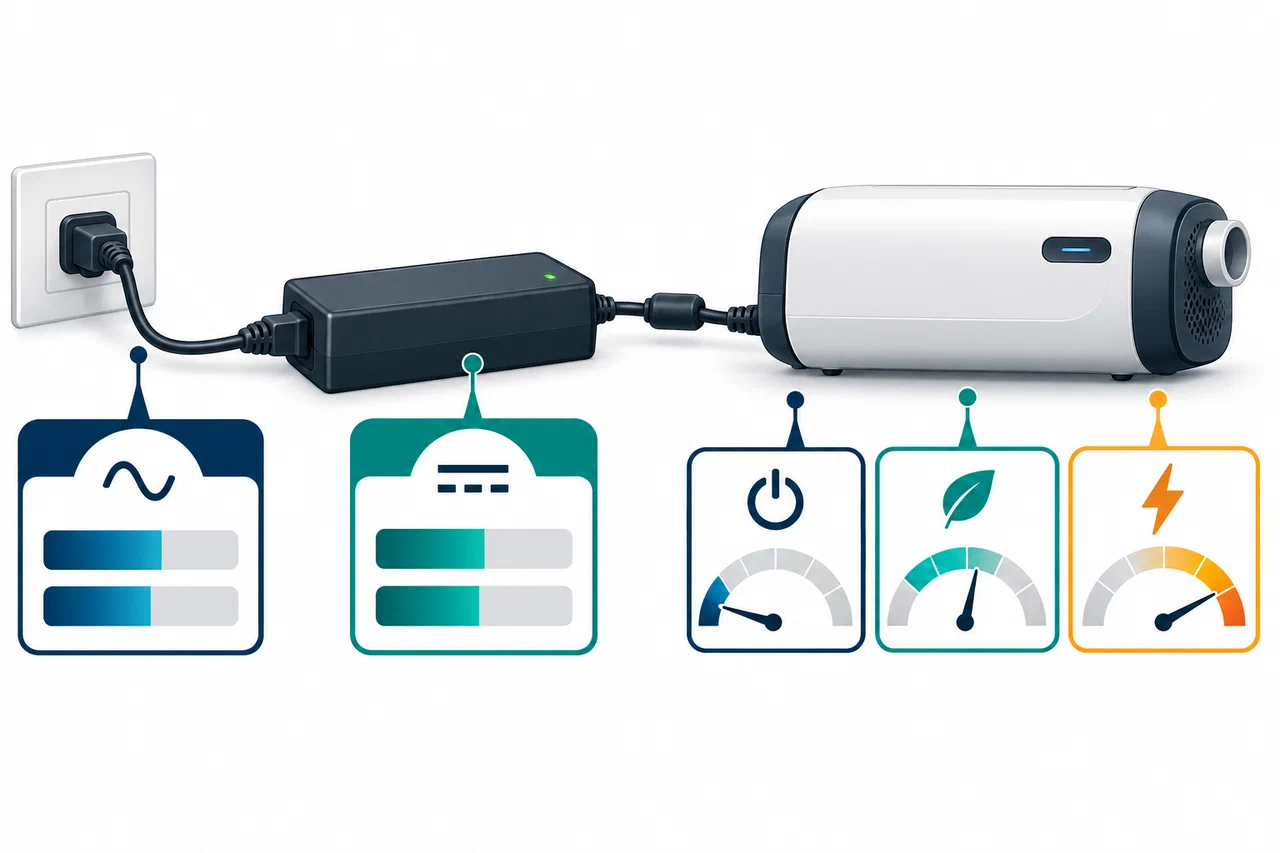
ResMed’s English APAC AirMini guide lists a power supply with 100–240 V, 50–60 Hz input and a 24 V DC / 0.83 A output. It gives 6.3 W typical consumption, 27 W high/peak consumption, and 1 W in standby. These are model guide values, not a station-side energy trace for your therapy settings. The guide does not turn typical watts into watt-hours for a night.
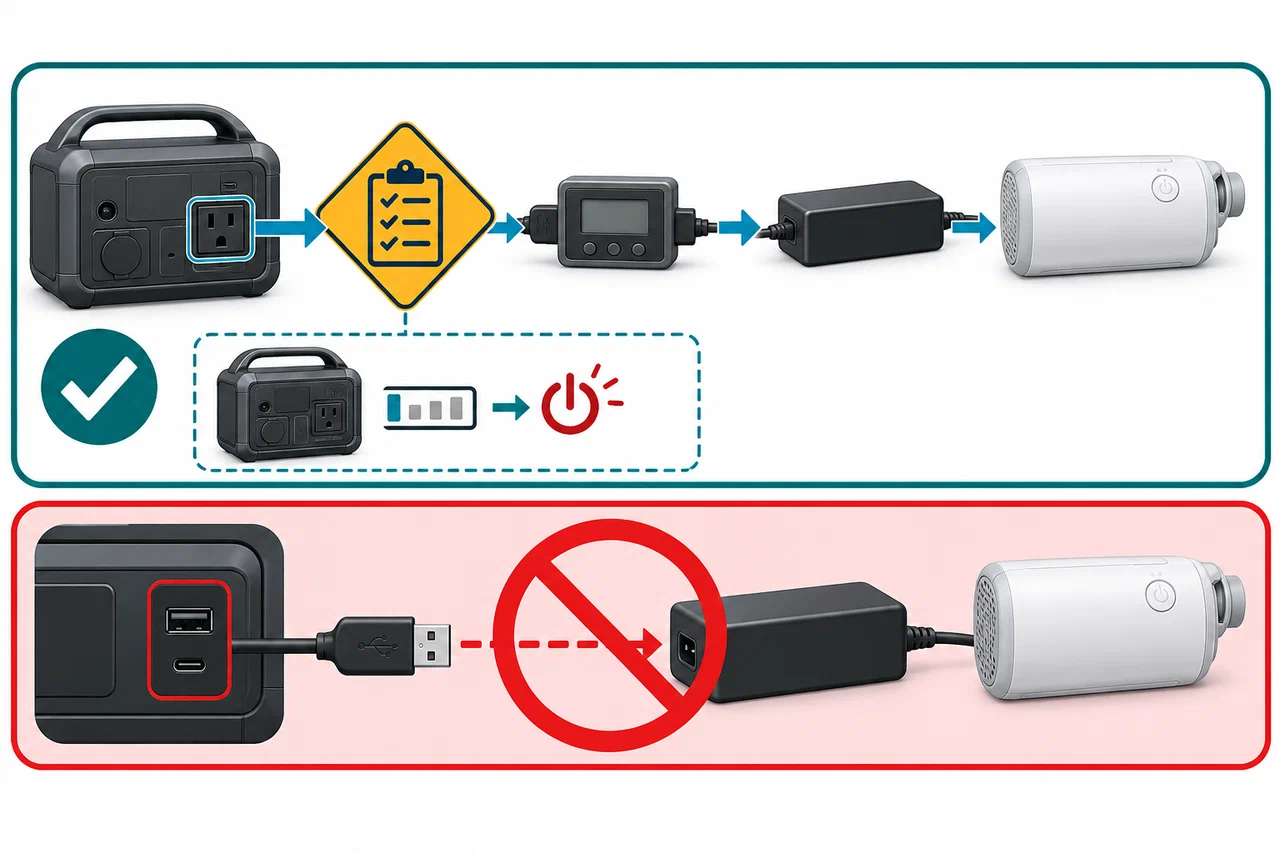
The same guide says AirMini automatically restarts therapy when its power source returns after an interruption. This describes behavior after power is restored; it does not provide uninterrupted therapy while power is absent or prove that a particular station has no transfer pause. It also warns against inserting a USB cable into the machine or connecting its power supply to a USB device. Do not interpret a low watt figure as permission to use an arbitrary USB-C or DC cable. A station can also shut its AC output off when a load is below a low-load threshold; confirm any such setting in the station manual and test the exact machine and supply together. A low average watt figure does not remove that continuity check.
Confirm your exact accessory path
Check the machine label, regional supply, device guide, and provider-supplied accessories. Verify voltage and frequency, connector, cable and any approved battery accessory. For an AC power station, verify output compatibility and that the inverter remains on at this load. For another power path, ask ResMed or the equipment provider whether the exact station and accessory are supported. A station port with the right connector shape is not sufficient evidence.
If a medically approved setup is available, measure energy at the station during a representative therapy period with the exact mask, humidification accessories, settings, and environmental conditions. An estimate based on measured station-side Wh per hour is more useful than multiplying the supply rating by hours. Preserve reserve for conversion losses, standby, battery condition, and an outage longer than expected.
Use runtime as one part of contingency planning
The AirMini guide states an operating temperature range of 5 °C to 35 °C; follow the applicable device instructions for storage and operation. Keep charging and spare batteries within manufacturer requirements. Ask the prescriber or equipment supplier what to do if power ends, alarms occur, or the station does not restart as expected. Maintain the prescribed alternative-power or relocation plan.
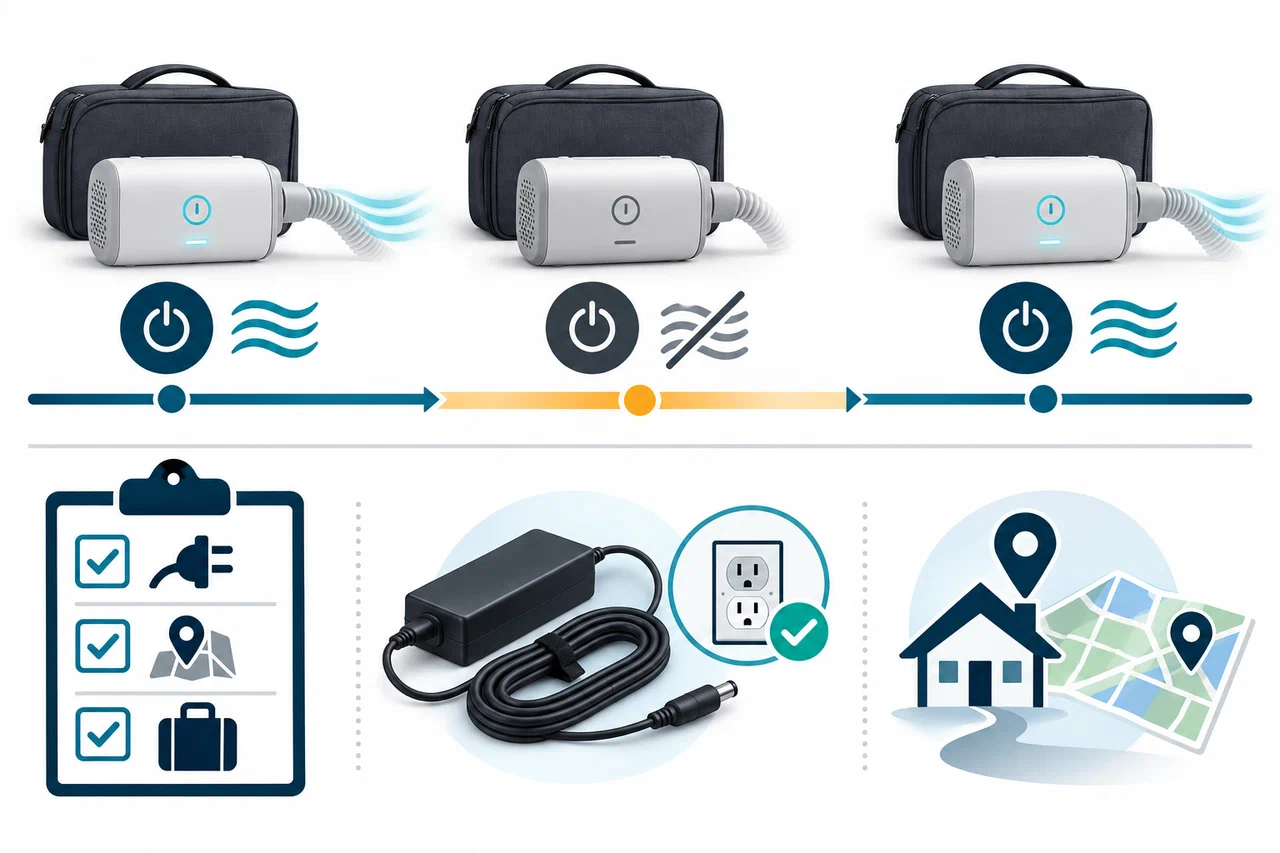
Do not change therapy, disable a medically needed feature, or substitute a power adapter to extend a calculated runtime without provider approval. Test the exact plan before travel or an outage and document the source, cable, starting charge, expected duration, and fallback. The estimate answers an electrical question only; it is not a promise of a safe night or continuous clinical therapy.