TOTO WASHLET TCF6632G Runtime from a Portable Power Station
Use the exact European TCF6632G supply and measured session energy; its heater component ratings do not establish simultaneous station load.
A bidet toilet seat may have several heaters and controls that operate in different states. Its headline power rating should not be treated as the sum of every component or as a measured session average. Confirm the exact regional model and use the manual’s electrical and installation instructions before considering backup power.
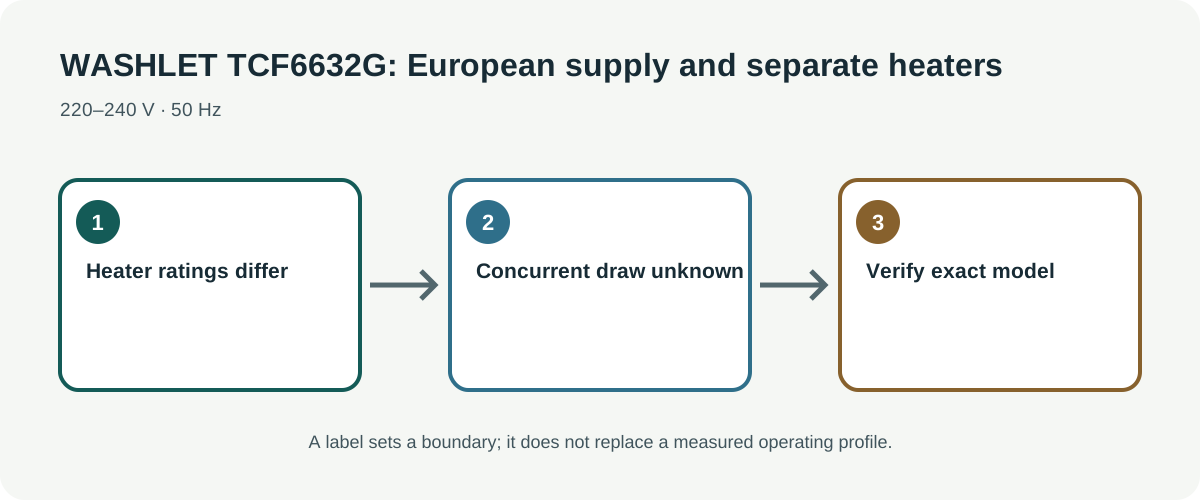
Identify the European TCF6632G profile
The cited TOTO Europe manual lists the TCF6632G for 220–240 V AC, 50 Hz. It reports rated consumption of 249–294 W and maximum consumption of 276–321 W, with component ratings including a 195–232 W tank water heater, a 185–220 W warm-air heater, a 45–54 W heated seat, and about 5.3 W for deodorizing. These values apply to this European model. They are not a time profile and should not be added together as though all components draw their maximum simultaneously.
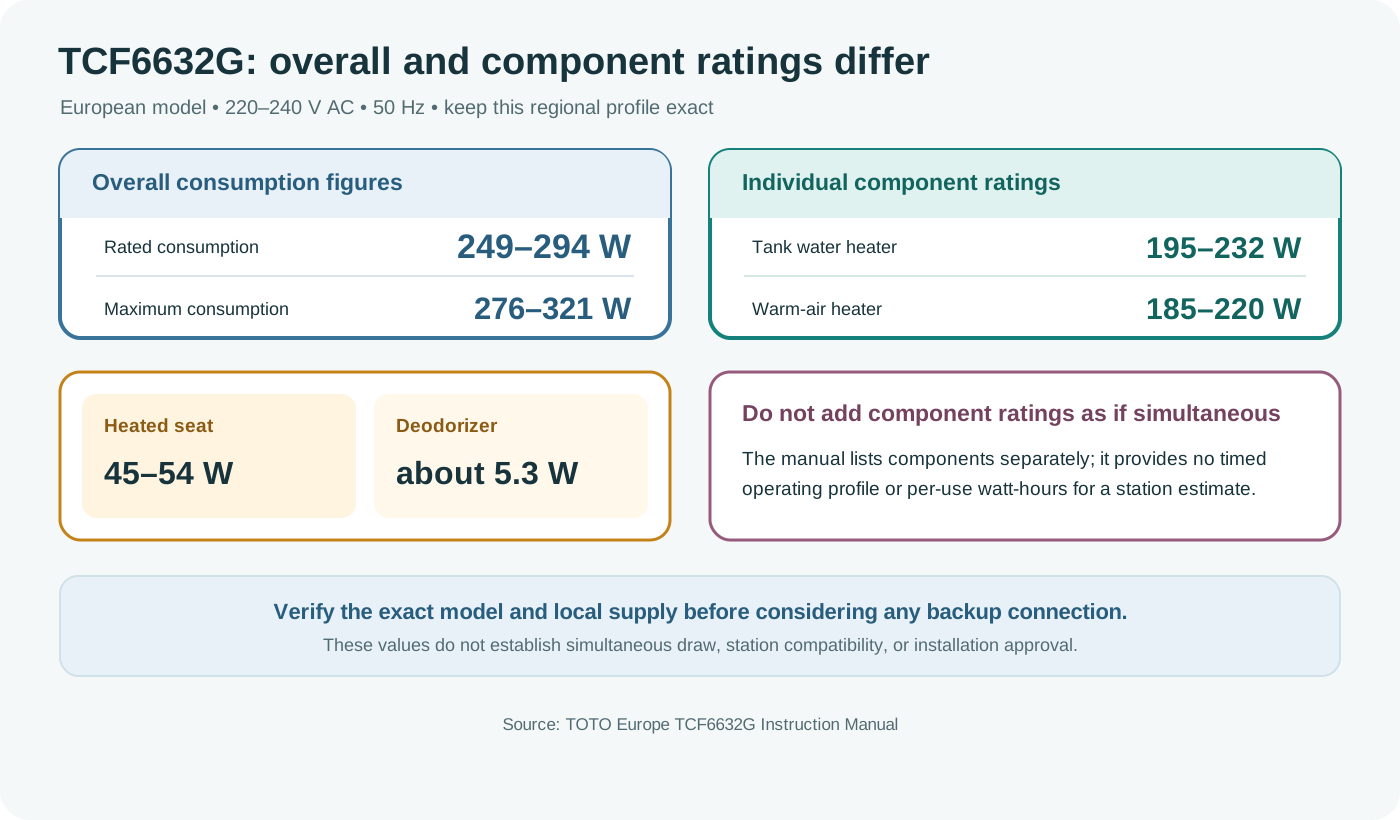
The manual does not establish an equivalent North American variant, portable-station runtime, or energy per use. Do not connect a 220–240 V, 50 Hz model to a 120 V station output or rely on a voltage adapter to transform power. Check the unit’s full model plate and local electrical requirements. A matching plug is not a compatibility test.
Treat bathroom installation as an electrical constraint
Follow TOTO’s installation and grounding requirements and the electrical rules where the unit is installed. Bathrooms are wet locations; use only a properly installed outlet and protective device appropriate to the location. Do not route an exposed power cable across a wet floor, alter a building circuit, or place a portable station where it can be splashed. If the manufacturer or local rules do not permit a portable connection, do not use one.
A power station must support the exact voltage and frequency, the rated load, any required protective grounding, and the location’s safety requirements. Its inverter’s continuous rating is separate from its stored Wh. The manual’s total and component ratings do not tell you what output is required at every moment; confirm that from TOTO or a qualified electrician rather than inferring it.
Measure the use pattern if permitted
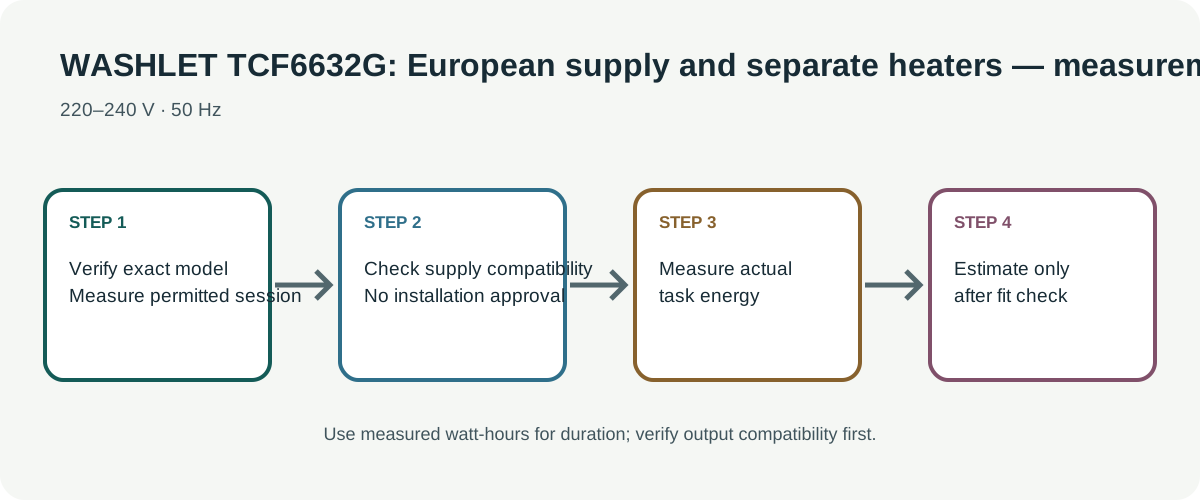
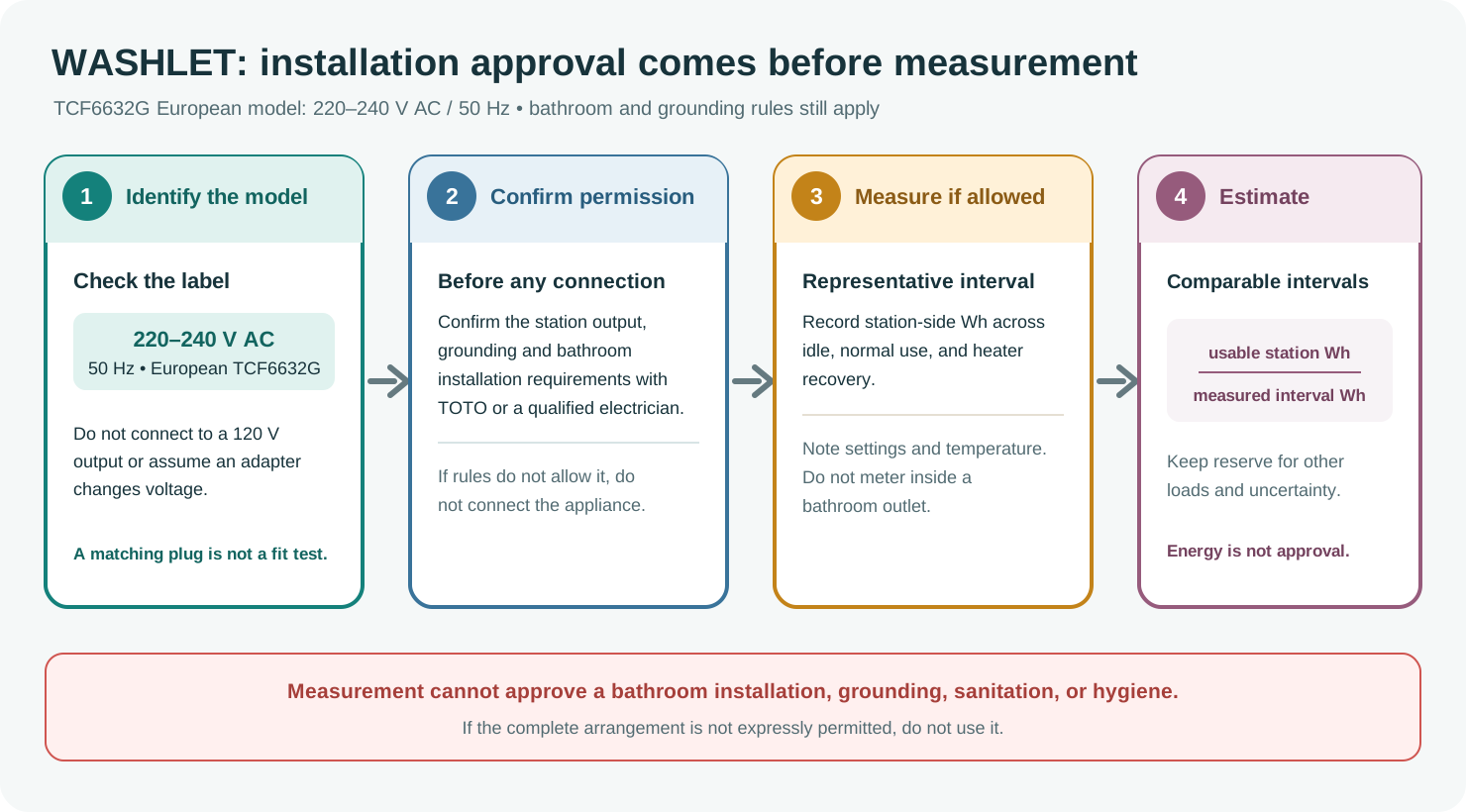
If the complete arrangement is explicitly allowed, record station-side Wh across a representative period that includes idle time, a normal use cycle, and any heater recovery. Note seat temperature, water temperature, ambient conditions, energy-saving mode, and whether the unit remained energized between uses. A short test can miss replenishment energy for the warm-water tank or seat. Do not open the appliance or add a meter inside a bathroom outlet.
Use measured station-side Wh for the interval to estimate how many comparable intervals fit within usable station energy, keeping reserve for other loads and uncertainty. A wall-side measurement excludes inverter losses. If only the manual rating is known, describe an assumed continuous-load scenario rather than a typical runtime or energy per flush. The cited manual provides no basis for a universal runtime calculation.
A runtime estimate is not installation approval
The electrical calculation does not certify the installation, sanitation, hygiene, or the appliance’s correct operation during an outage. Keep the original plumbing and electrical protections in place, and have a qualified professional resolve any uncertainty about the outlet or grounding. For this model, regional compatibility is the first decision; energy estimation comes only after that gate is satisfied.