Nespresso Vertuo Next Runtime and Brew Energy from a Portable Power Station
Check the Vertuo Next regional voltage and rated input, then measure a full warm-up and brew pattern instead of inferring energy per cup.
A single-serve brewer can draw substantial power while heating water, even though a cup is prepared over a short interval. Its rating is useful for checking a station’s output limit; the energy for a brew depends on warm-up, serving size, repeated cups, and standby behavior. Confirm which regional machine you have before connecting it.
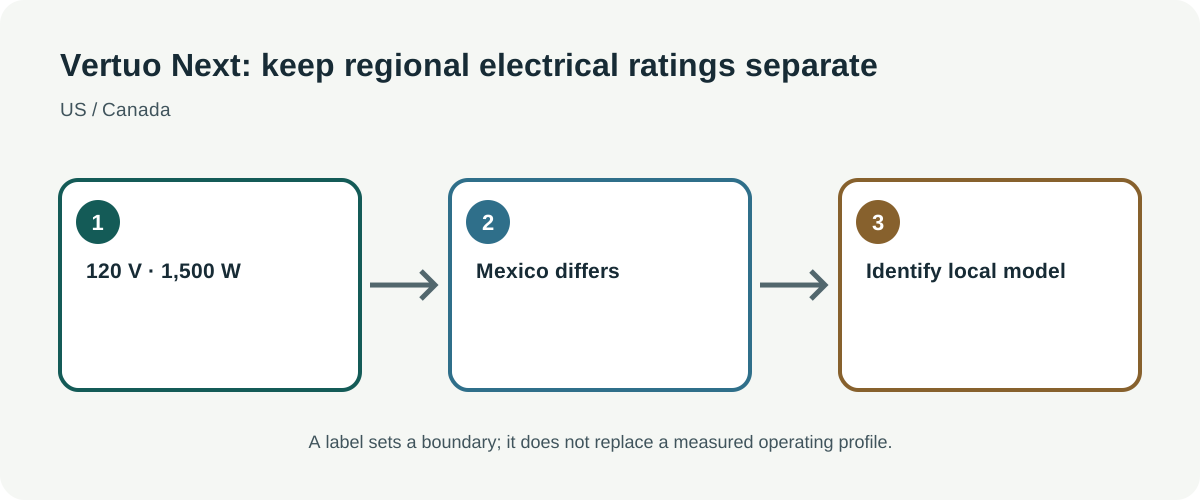
Vertuo Next ratings vary by market
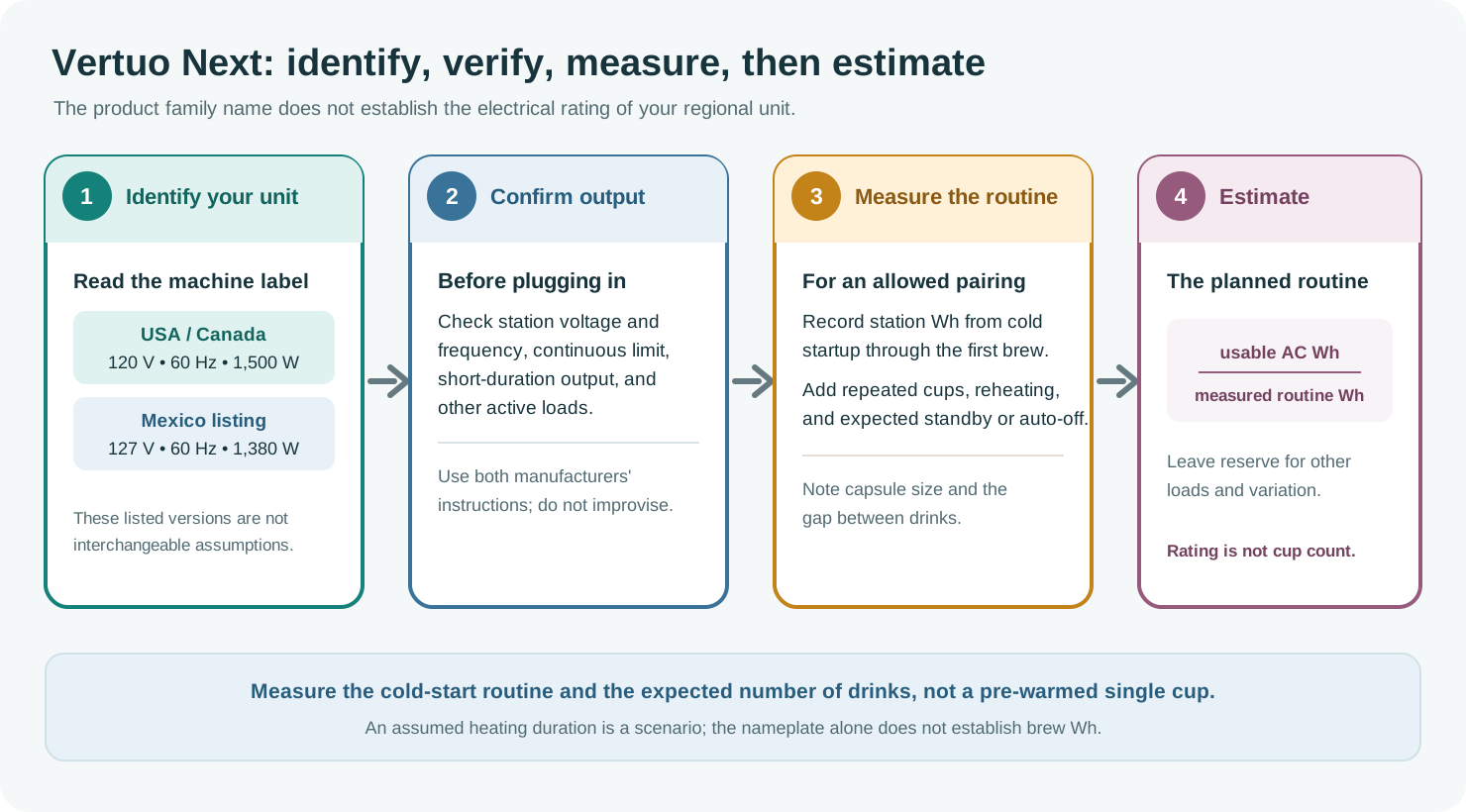
Nespresso lists the Vertuo Next at 120 V, 60 Hz, and 1,500 W for USA and Canada variants. The same assistance page lists 127 V, 60 Hz, and 1,380 W for the Mexico variant, and a removable 37 fl oz / 1.1 L water tank. These are distinct regional rows, not interchangeable ratings. The source provides no energy-per-brew trace, warm-up profile, startup demand, or station runtime. It does not establish UK model compatibility.
Read the machine’s own label and instructions. Do not choose a power-station setting from the “Vertuo Next” family name alone, adapt a plug without checking the electrical requirements, or assume the two regional rows describe every unit sold in North America. Voltage, frequency, connector, and local electrical rules all matter.
Compare the heater load with the station
A 1,500 W rating can be close to the continuous-output ceiling on a compact station. Verify the station’s AC voltage and continuous limit, any short-duration limit, and how it behaves with other active loads. The 1,380 W Mexico rating applies only to that listed version. Do not assume an inverter can handle a brew because its capacity in Wh appears large; stored energy and maximum output are separate constraints.
Keep the machine on a stable, dry surface and follow Nespresso’s water, capsule, cleaning, and ventilation directions. Do not open the machine or improvise electrical connections. If the station trips or the machine displays a fault, stop and follow each product’s troubleshooting instructions rather than repeatedly resetting the output.
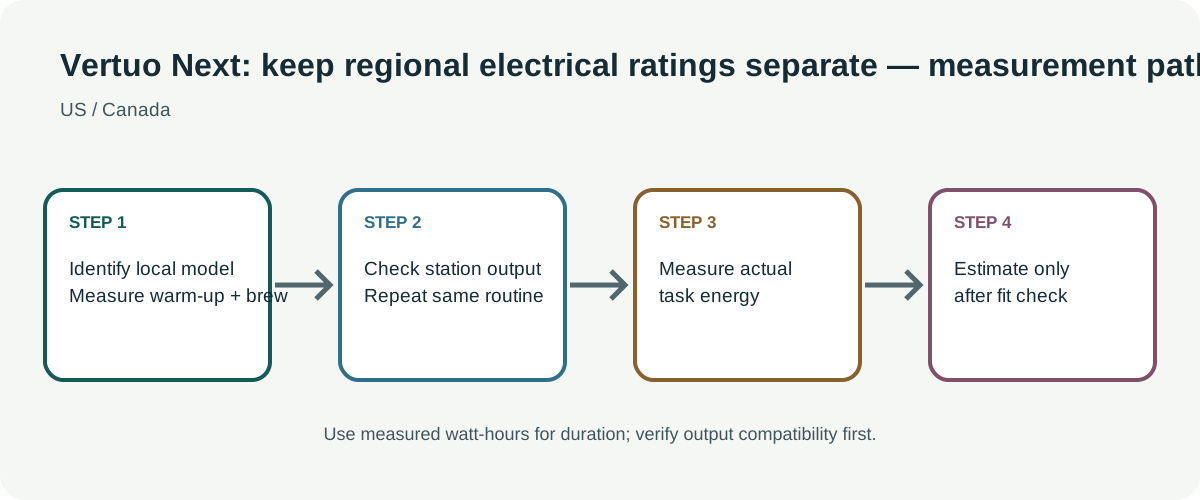
Measure a repeatable coffee routine
With an approved combination, measure station-side Wh from machine startup through the first brew, then record extra brews and the standby or automatic-off interval you actually expect. Note the capsule size, initial machine temperature, gap between drinks, and whether the heater reheats. A single cup tested after the machine is already warm will understate the energy for a cold start and several drinks.
Use the measured energy for the planned number of drinks and compare it with usable AC energy from the station. Leave reserve for other loads and changes in the routine. If only the nameplate is available, describe any watt-hours calculation as a scenario based on an assumed heating duration. The rating alone cannot support a claim such as “cups per battery” or a universal runtime.
Prioritize hot water if energy is limited
When the main need is hot water rather than capsule brewing, compare the measured kettle task in the electric kettle guide. Those tasks have different heating controls and must be measured separately. Choose the desired appliance, run only the loads that fit the verified output, and keep an alternate way to make a drink if station capacity is reserved for a more important device.