Heating Pad Runtime from a Portable Power Station
Estimate a heating pad session from measured thermostat cycling and the exact model label, while keeping personal comfort and clinical advice separate from battery runtime.
A personal heating pad is a smaller load than a room heater, but its energy still depends on its controls and the time it is used. The label helps confirm voltage and maximum electrical load; it does not show how much energy a session uses after the thermostat cycles. Measure the pad under the settings and duration that match the intended use.
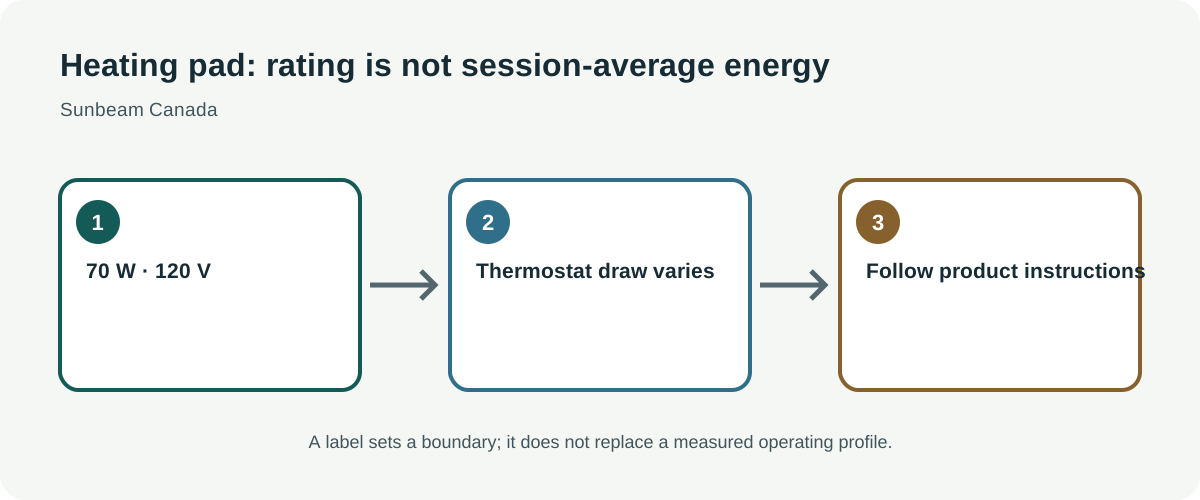
A named product example
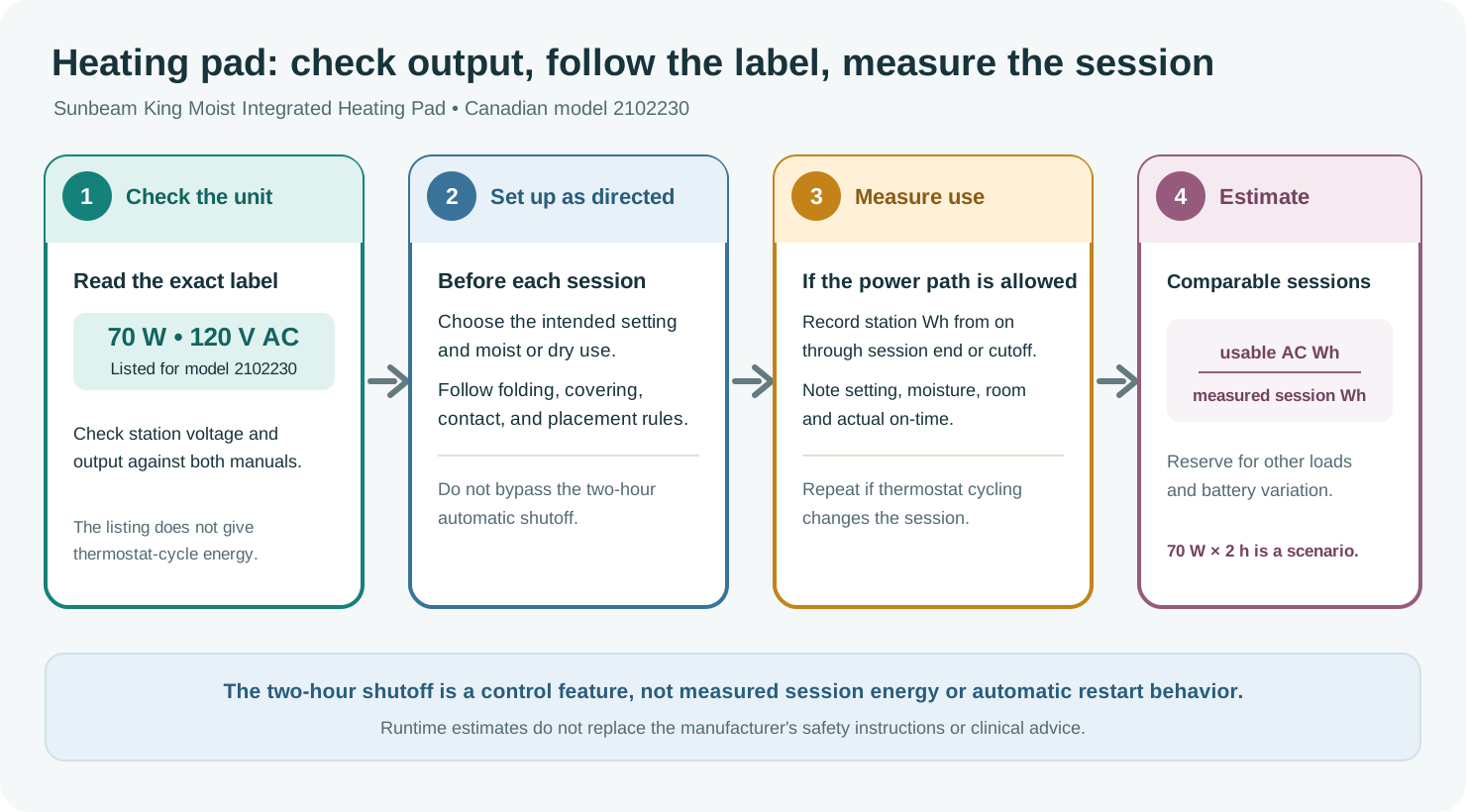
Sunbeam Canada lists the King Moist Integrated Heating Pad, model 2102230, at 70 W and 120 V AC. The page describes four heat settings, moist or dry use, and a two-hour automatic shutoff. These facts apply to that Canadian-market model. They do not establish watts at each setting, thermostat duty, energy per session, or use with another country’s mains supply.
Check the rating plate on your pad, including voltage and frequency, and use the exact model manual. A two-hour cutoff is a control feature, not a promise that the pad uses a fixed amount of energy or that it will restart automatically. Do not infer a longer session by repeatedly bypassing or overriding the shutoff.
Check output and placement
Compare the pad’s rated supply with the station output. Although 70 W is modest relative to many AC loads, confirm that the station supports the pad’s voltage and any manufacturer requirements. Check that the outlet, cord, and pad remain dry and undamaged, and keep the station away from water, fabric coverage, and the heating surface. Do not use an unapproved extension, modified plug, or damaged pad.
Follow all instructions about folding, covering, moisture, direct skin contact, and automatic shutoff. Heating pads can cause burns or overheating if used incorrectly, particularly when sensation or mobility is reduced. A power station does not change those risks. Ask a healthcare professional about safe use for a medical condition, and follow the product manual rather than using a runtime calculation as therapeutic advice.
Measure the session you expect
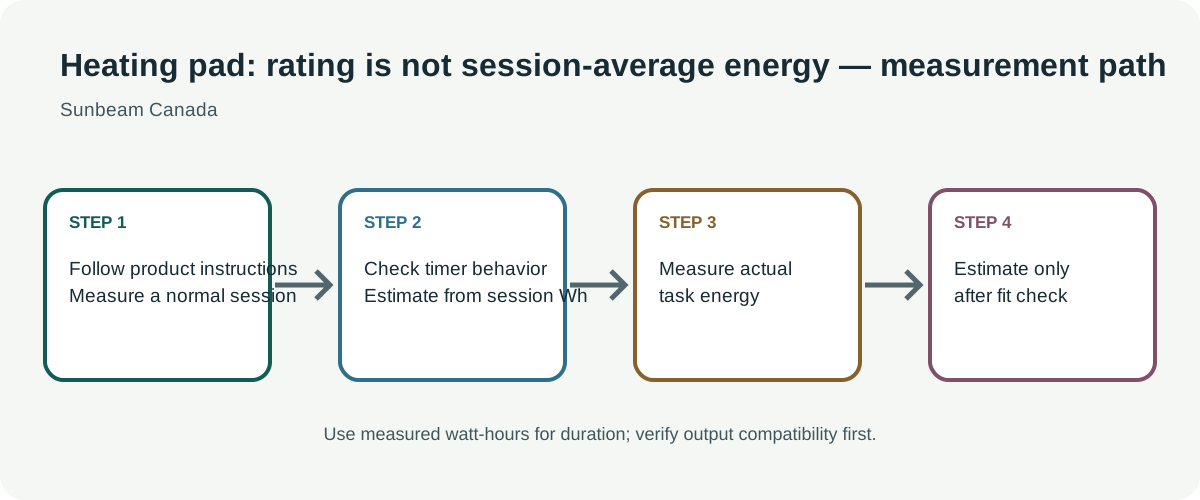
If the manufacturer permits the power path, record station-side Wh from the time the pad is switched on until the planned session ends or automatic shutoff occurs. Note the heat setting, dry or moist setup, room temperature, bedding or cover conditions allowed by the manual, and actual on-time. Repeat with the same setup if the thermostat cycles; a few seconds at 70 W cannot describe a full two-hour session.
Use the measured energy to estimate how many comparable sessions fit within the station’s usable AC energy. Keep reserve for station conversion loss if the measurement was taken at the wall, other connected loads, and normal battery aging. If you only know the 70 W rating, calculating 70 W multiplied by two hours is a continuous-rated-load scenario, not measured consumption and not a manufacturer runtime claim.
Do not substitute comfort for a safety plan
A pad may warm one surface but cannot heat a room or protect a person from cold exposure. Plan appropriate clothing, bedding, and a warmer location if indoor conditions become unsafe. If the pad is being used under clinical direction, keep that advice separate from the station’s electrical estimate and ask the clinician about an alternative if power is interrupted.