GE Profile Opal 2.0 Ice Maker Runtime from a Portable Power Station
Estimate Opal 2.0 energy from a measured ice-making session and preserve the difference between rated watts, ice production, and station runtime.
A nugget ice maker is a powered refrigeration and water-handling appliance. A station’s advertised watt-hours cannot be converted directly into pounds of ice or days of operation because the product’s production depends on ambient and water temperatures, while the input cycles and may include startup or idle periods. Start with the exact Opal model and measure a representative ice-making session.
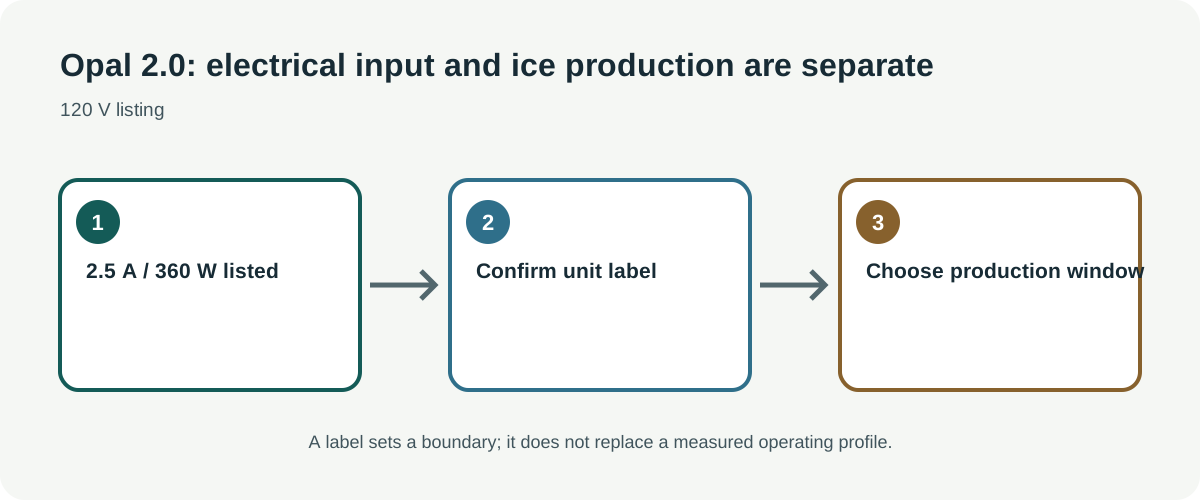
Read the Opal specification as a boundary
GE lists the XPIO23SCSS Opal 2.0 for 120 V AC, 60 Hz, and shows both 2.5 A and 360 W as electrical figures. Those source-listed values do not reconcile as one 120 V input rating, so confirm the unit nameplate and treat the figures as unresolved when checking station output; do not choose one as a verified continuous load. GE also lists a maximum 38 lb/day production at 70 °F ambient and 60 °F water, and 30.9 lb/day at 90 °F ambient and 70 °F water under the stated DOE condition. The bin holds up to 3 lb. The production numbers do not provide energy per pound, average draw, or runtime from a power station.
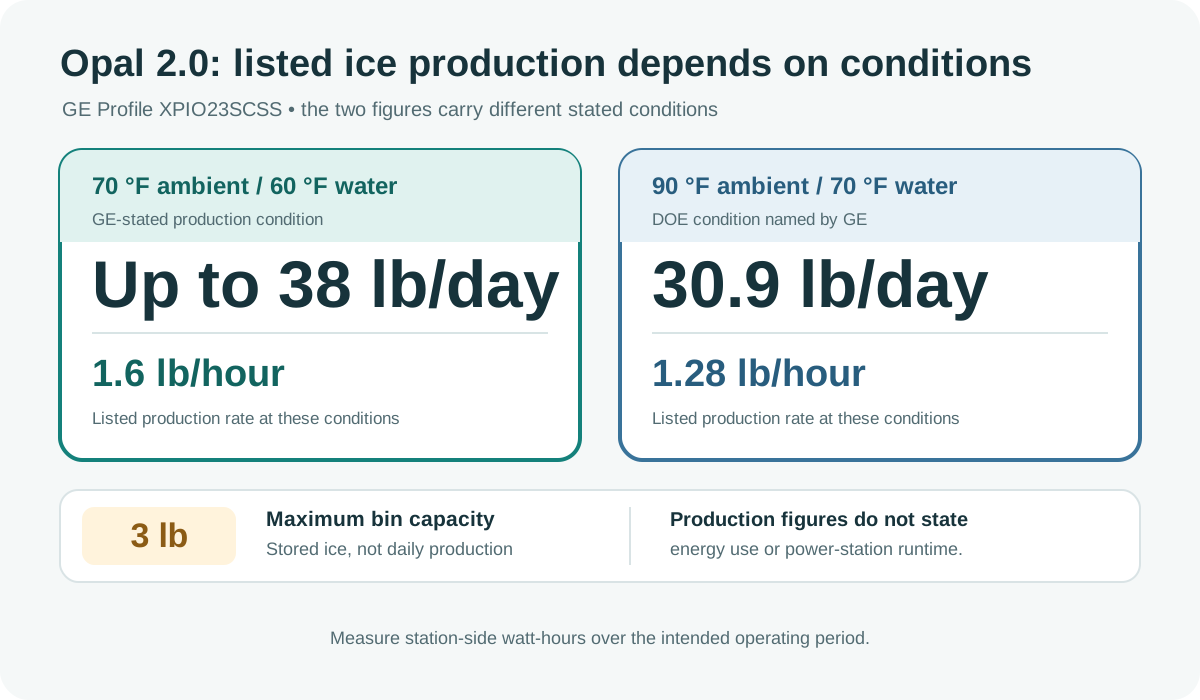
Confirm the complete model suffix and nameplate before using those examples. Do not treat the capacity rating as actual daily output in a hot room, or assume a full bin means the station used a fixed amount of energy. Ice retrieval, water temperature, air circulation, clean condition, and how often the unit cycles can alter the result. Follow GE’s setup and maintenance instructions for the appliance.
Check the inverter and setup
The station must supply the unit’s required AC voltage and frequency and handle its continuous input. The rated current and watts do not tell you the compressor or mechanism’s startup demand. Check station surge duration and appliance guidance; if either is unclear, obtain a safe measurement rather than guessing at an inrush multiplier. Include any refrigerator or other equipment connected to the same station when checking output limits.
Place the appliance as the manual requires, with room for air circulation and a safe water source and drainage arrangement. Keep the station dry and away from spills, condensation, or hot exhaust. Do not change grounding, remove covers, or connect the unit to building wiring to use a larger battery.
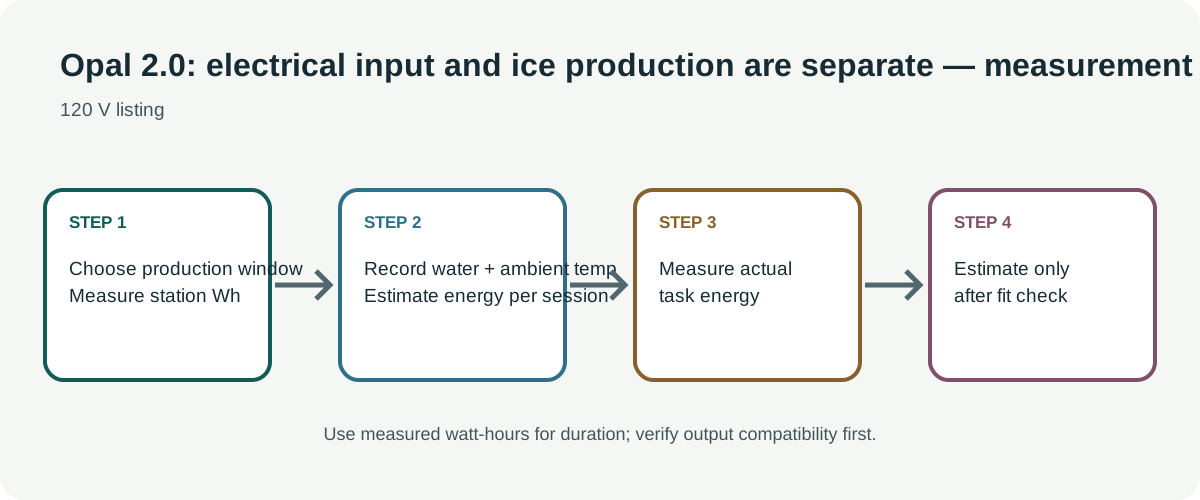
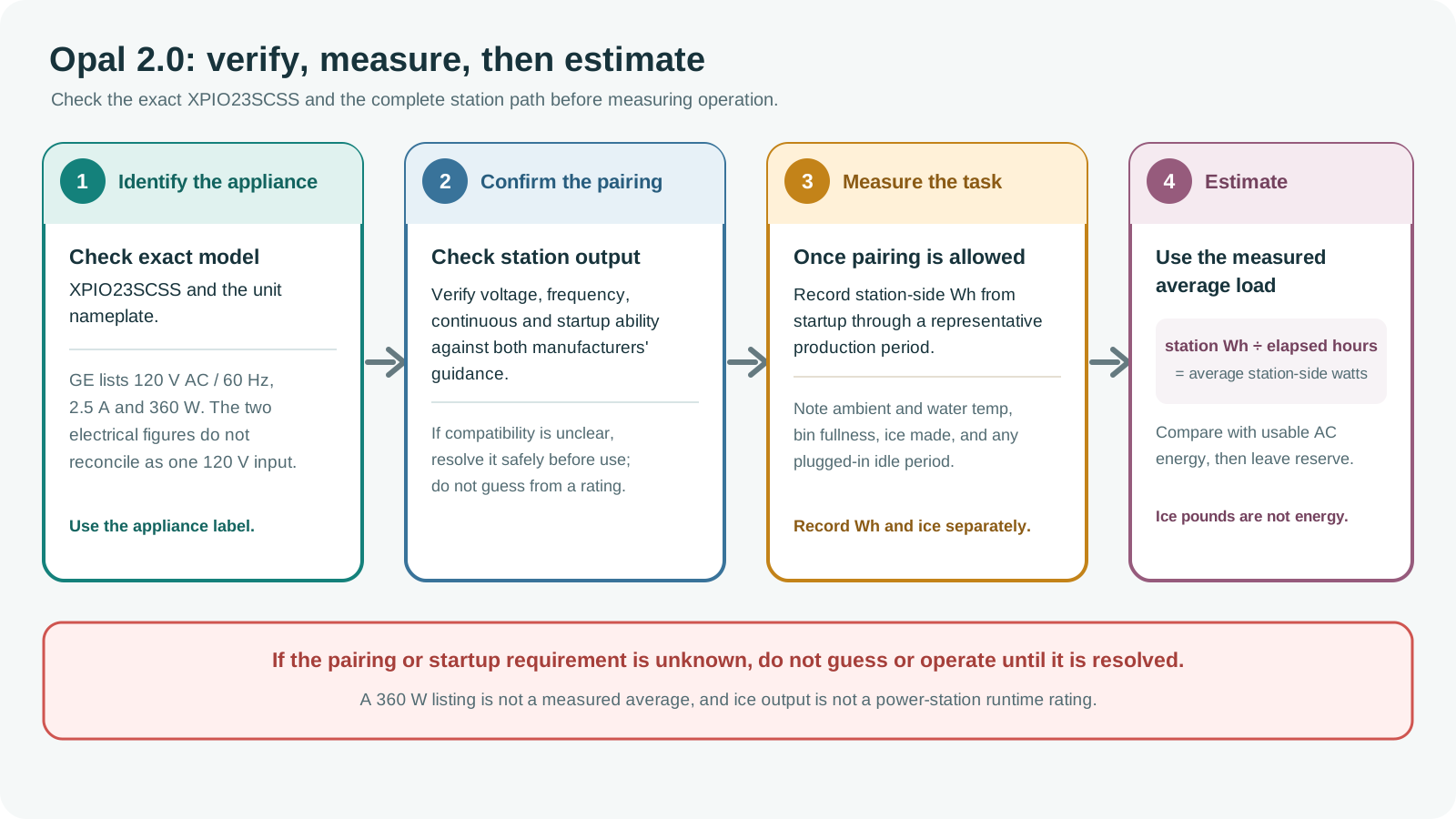
Measure ice making rather than assuming it
After confirming the pairing is allowed, record station-side Wh from startup through a representative period of production. Note ambient temperature, incoming water temperature, bin fullness, and the number of pounds or batches produced. Include idle periods if the unit remains plugged in between servings. Repeat under conditions close to the outage scenario; one short sample is not a full-day profile.
If the measurement covers a known interval, divide measured Wh by elapsed hours to get average station-side watts for that condition. Estimate an intended period using the station’s usable AC energy divided by that measured average, then reserve energy for hotter conditions and other loads. If only the 360 W rating is known, a continuous 360 W scenario can be calculated as a conservative upper-load illustration, but it must not be called typical consumption or ice output.
Production and runtime are separate outcomes
A battery may run the appliance while production falls below expectation or stops because conditions change. Decide whether the real need is ice for drinks, a particular amount, or simply powered operation, and plan another way to keep food or medicine cold if that is the underlying need. The Opal’s ice production figures do not certify food safety or substitute for a refrigerator contingency plan. Test the complete station and appliance before relying on it, and record both the energy used and the ice actually made.